Crossing the Midline: The Movement Milestone That Predicts Handwriting and Reading Readiness
Why your child's ability to reach across their body matters far more than most parents realize.
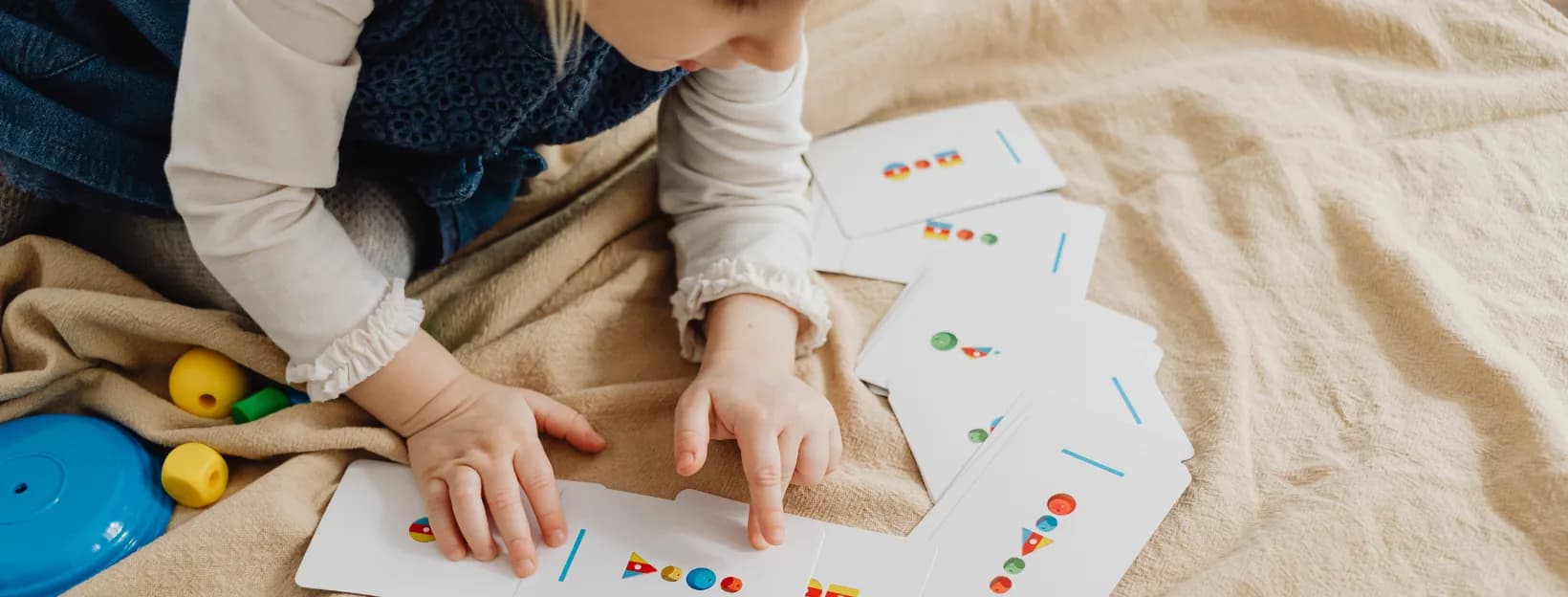
When a toddler picks up a crayon with their right hand and draws a line that crosses all the way to the left side of the paper without switching hands, something significant has just happened in their brain. That single, unremarkable-looking movement — reaching across an invisible vertical line that runs down the center of the body — is called crossing the midline, and developmental specialists consider it one of the clearest early signals of how the brain's two hemispheres are learning to cooperate.
Most parents have never heard the term. Yet by the time a child enters first grade, this skill quietly underlies their ability to read left-to-right across a page, form letters without awkward hand switches, and coordinate both sides of their body for dozens of daily tasks. Here's what the research actually says, and what you can do about it.
What "Crossing the Midline" Actually Means
The body midline is an imaginary vertical axis that divides us into left and right. Crossing it means intentionally moving one hand, foot, or eye into the opposite side of the body's space — and doing so smoothly, without compensating by rotating the trunk or switching hands.
This isn't just a fine motor trick. It requires the two cerebral hemispheres to communicate through the corpus callosum, the thick bundle of nerve fibers connecting left and right brain. Research into dyslexia has highlighted how atypical corpus callosum white matter — reflecting altered right-to-left hemisphere communication — is associated with reading difficulties, and that this pattern appears resistant to intensive remedial intervention (Mather et al., Perceptual and motor skills, 2022). In other words, how well the brain's hemispheres talk to each other during early childhood has downstream consequences that are genuinely hard to reverse later.
Movement screenings that track bilateral coordination and left-right asymmetries in children have identified dysfunctional movement patterns that involve cognitive, perceptual, proprioceptive, and motor functions working together (Vehrs et al., International journal of environmental research and public health, 2021). Crossing the midline sits squarely at that intersection.
Why This Milestone Predicts Reading and Writing
The connection to handwriting is more direct than most parents expect. Studies of children with unilateral motor impairments show that bilateral coordination — the ability to coordinate both sides of the body together — significantly correlates with handwriting quality (Bumin et al., Disability and rehabilitation, 2010). Impairment in bilateral coordination, alongside deficits in proprioception, upper-extremity speed, and visual-motor organization, is associated with meaningfully worse handwriting outcomes (Bumin et al., Disability and rehabilitation, 2008).
For reading, the relationship runs through interhemispheric transfer. One hypothesis in the dyslexia literature proposes that premature writing instruction, before a child's visual-proprioceptive integration is mature enough to map whole-word images onto movement memory, may contribute to the mirror-letter errors frequently seen in children with dyslexia (Mather et al., Perceptual and motor skills, 2022). That maturation process depends heavily on the corpus callosum and anterior commissure — the same structures that make midline crossing possible.
Research examining graphomotor tasks in 6- to 10-year-old children found that working in the contralateral hemispace (the side opposite to the working hand) does affect performance, confirming that crossing the midline places real, measurable demands on the developing motor system (Smits-Engelsman et al., Motor control, 2004). By age 9 or 10, most typically developing children handle this demand smoothly. Children who still struggle with it past that window are worth watching closely.
The Sensorimotor–Learning Link
Research with preschool children aged 5–7 found that kids identified as at risk for learning difficulties showed significantly more impairments on sensorimotor measures — including body midline crossing — compared with typically developing peers (Tószegi et al., Occupational therapy international, 2023). That same study included midline crossing explicitly as one of the assessed sensorimotor skills, alongside postural imitation, bilateral motor coordination, and standing balance (Tószegi et al., Occupational therapy international, 2023).
Interestingly, the strongest predictors of learning difficulty risk in that study were verbal working memory and standing balance — not midline crossing alone (Tószegi et al., Occupational therapy international, 2023). This is an important caveat: midline crossing difficulty is a signal worth taking seriously, but it is one piece of a broader sensorimotor and executive function picture, not a single definitive test. Treating any one milestone as a guaranteed predictor overstates what the evidence supports.
What the evidence does support clearly is that sensorimotor and executive function development are deeply intertwined, and that supporting both during preschool years meaningfully influences school readiness (Tószegi et al., Occupational therapy international, 2023).
What Delayed Midline Crossing Looks Like
Children who struggle with this milestone often show patterns that are easy to miss or misread:
- Hand switching at the midline. The child begins drawing or reaching with the right hand, then transfers the object or tool to the left hand before crossing the body's center. Watch for this during coloring, eating, and reaching for objects on the opposite side.
- Trunk rotation to compensate. Instead of reaching across, the child turns their whole body so the object is now on their dominant side. It looks like fidgeting.
- Difficulty tracking with the eyes. Following a moving object across the visual field requires the eyes to cross the midline too. Struggles here can show up as losing one's place while reading.
- Avoidance of crossing patterns. The child preferentially uses each hand only on its own side of the body — reasonable in infancy, but a flag by ages 4–5.
Children with conditions affecting motor coordination or brain development — including those born prematurely or with perinatal complications — may show particular difficulty with these patterns due to the underlying neurology involved (Geva et al., NeuroImage. Clinical, 2020).
How to Support Midline Crossing at Home
The good news is that midline crossing responds well to play-based practice. None of these require specialized equipment:
Crayon rainbows. Tape a large sheet of paper to a wall at chest height. Ask your child to draw wide arching lines from one side of the paper to the other using one hand only. The wall position discourages trunk rotation.
Simon Says with crossing patterns. "Touch your right ear with your left hand." Simple, fun, and directly targets the skill.
Ball rolling across the body. Sit facing your child. Roll a ball slightly to their non-dominant side so they must reach across to stop it.
Windshield wiper arms. Lying on their back, ask your child to sweep both arms together from side to side like a snow angel — then one arm at a time across the body.
Beading and stringing. Holding a string in one hand and threading beads with the other requires sustained bilateral coordination and gentle midline crossing.
Consistency matters more than duration. Ten minutes of intentional crossing-pattern play several times a week is more useful than a single long session.
If your child is 5 or older and consistently avoids crossing the midline despite practice, or if you notice the difficulty alongside other concerns — handwriting struggles, trouble reading left-to-right, coordination issues, or early signs of learning difficulty — it is worth raising with your pediatrician or requesting an occupational therapy evaluation. The sensorimotor foundations for school readiness are genuinely easier to support before formal literacy instruction begins than after.
Movement and learning are not separate tracks. The body teaches the brain, especially in the early years. A child who can comfortably reach across themselves — in play, at the table, during art — is laying real neural groundwork for the left-to-right eye sweeps of reading and the fluid bilateral coordination of handwriting. It's a small motion with a long reach.
If you're concerned about your child's sensorimotor development, speak with your pediatrician, who can refer you to a pediatric occupational therapist for a formal assessment.
References
- Mather et al. (2022). Preventing Children From Developing Dyslexia: A Premature Writing Hypothesis.. Perceptual and motor skills. https://pubmed.ncbi.nlm.nih.gov/35084244/
- Vehrs et al. (2021). Assessment of Dysfunctional Movements and Asymmetries in Children and Adolescents Using the Functional Movement Screen-A Narrative Review.. International journal of environmental research and public health. https://pubmed.ncbi.nlm.nih.gov/34886227/
- Bumin et al. (2010). An investigation of the factors affecting handwriting skill in children with hemiplegic cerebral palsy.. Disability and rehabilitation. https://pubmed.ncbi.nlm.nih.gov/20205584/
- Bumin et al. (2008). An investigation of the factors affecting handwriting performance in children with hemiplegic cerebral palsy.. Disability and rehabilitation. https://pubmed.ncbi.nlm.nih.gov/19230231/
- Smits-Engelsman et al. (2004). Are graphomotor tasks affected by working in the contralateral hemispace in 6- to 10-year-old children?. Motor control. https://pubmed.ncbi.nlm.nih.gov/15585905/
- Tószegi et al. (2023). Associations between Executive Functions and Sensorimotor Performance in Children at Risk for Learning Disabilities.. Occupational therapy international. https://pubmed.ncbi.nlm.nih.gov/37781444/
- Geva et al. (2020). Volume reduction of caudate nucleus is associated with movement coordination deficits in patients with hippocampal atrophy due to perinatal hypoxia-ischaemia.. NeuroImage. Clinical. https://pubmed.ncbi.nlm.nih.gov/33010533/