
Anxiety in Children Starts Earlier Than You Think. Here Are the Signs.
The disruptive child gets attention. The anxious child suffers in silence. By the time most parents notice, anxiety has had years to compound.
Pediatric anxiety has a recognition problem.
If a child is hitting, biting, melting down, refusing school, or setting off smoke alarms, the adults around them notice. Conferences are called. Interventions happen. The behavior is loud, and loud gets attention.
If a child is quietly asking the same reassurance question 40 times a day, avoiding unfamiliar activities, reporting stomachaches before school, perfectionistic about schoolwork, or lying awake at bedtime worrying — nobody calls a conference. Nobody writes a referral. The child is "sensitive" or "cautious" or "a good kid." Their suffering is invisible, and their adults remain unaware until the anxiety becomes severe enough to disrupt function.
Anxiety is now the most common mental-health diagnosis in children, and it is also the most under-recognized — because it doesn't act like a classic behavior problem. (1)
The good news: childhood anxiety is highly treatable when caught early. The bad news: it's routinely not caught early, and it compounds. A six-year-old with untreated reassurance-seeking becomes a 10-year-old with avoidance behavior becomes a 14-year-old with clinical anxiety and school refusal. Each stage is harder to treat than the previous one.
This is an article about how to see it before it gets loud.
What Anxious Kids Actually Look Like
The mainstream image of anxiety — a pale, trembling, overtly nervous child — is wrong for most cases. Childhood anxiety usually presents through specific patterns that look like personality quirks, behavioral issues, or physical symptoms.
The most common forms:
- Excessive reassurance-seeking. "Are you sure everything is okay? Are we going to be late? Is Mommy coming back?" The same question, many times a day, and the answer doesn't land — they ask again 20 minutes later. This is the single most common presentation in young children and it's almost always missed because parents treat it as a normal question instead of as a symptom.
- Avoidance. Refusing new activities, new foods, sleepovers, birthday parties, speaking up in class. Read as "shy" or "cautious" rather than as the anxiety-management strategy it actually is.
- Somatic complaints. Stomachaches, headaches, "I don't feel good" — especially timed to school mornings, tests, social events. Real pain, real sensation, driven by the anxiety-activating autonomic nervous system.
- Perfectionism. Tearing up homework that isn't perfect, refusing to submit work, meltdown over a wrong answer. Looks like "high-achiever" framing but is usually fear of failure manifesting as rigid self-standards.
- Sleep disruption. Trouble falling asleep because of racing thoughts, nighttime fears, not wanting to be alone, middle-of-the-night waking. (2)
- Irritability and anger. Yes, really. Anxiety in children often looks like anger — especially in boys. The underlying emotion is fear; the expressed emotion is aggression, especially when the anxiety-triggering situation can't be avoided.
- Separation difficulty beyond developmentally typical windows. Clinging, crying at dropoff well past the expected age, refusal to have caregivers other than the primary parent.
- Selective mutism. The child who talks freely at home and not at all at school — this is an anxiety presentation, not a choice.
Notice what almost all of these have in common: they are quiet problems. They don't disrupt a classroom. They don't get a referral. They suffer at a low, continuous volume that most adults don't notice until it escalates.
At Avaneuro, the Childhood Anxiety module exists because the gap between what anxiety actually looks like and what parents are taught to look for is enormous, and it's where a lot of treatable problems become untreatable ones.
Why Early Intervention Matters So Much
Anxiety disorders have a specific trajectory: they tend to get more entrenched, not less, over time. The neural circuits that produce the anxious response get strengthened every time they fire without resolution. Avoidance behavior — the child's natural strategy — reinforces the underlying anxiety rather than resolving it.
Here's the mechanism: a child feels anxious about, say, birthday parties. They avoid a birthday party. The anxiety drops (relief). The brain encodes: "avoidance worked — next time, avoid harder." Over months and years, the avoidance catalog grows. By middle school, the child has a long list of off-limits activities, each of which is now more anxiety-provoking than the last because they've been avoiding so long the exposure feels enormous.
This is why the research on parental accommodation — which we covered in depth in our piece on tantrums and emotional regulation — is so important. Well-meaning parents who restructure family life to prevent the child from feeling anxiety are, at the neural level, feeding the problem. (3)
The counter-move is exposure plus support — letting the child experience the anxiety while the nervous system of a calm adult is present. The discomfort is survived. The brain encodes: "I felt that, and I'm still here." Over time, the anxiety circuits recalibrate.
Cognitive-behavioral therapy (CBT) with a graduated exposure component is the gold-standard intervention for childhood anxiety and has among the highest effect sizes of any pediatric mental-health treatment. (1) The catch: it works best when the anxiety is recent and mild, and gets harder as the avoidance has had more time to generalize.
Early recognition → early intervention → high treatment response. Late recognition → entrenched avoidance → harder treatment course. The arithmetic favors catching it young.
The Myths That Are Costing You
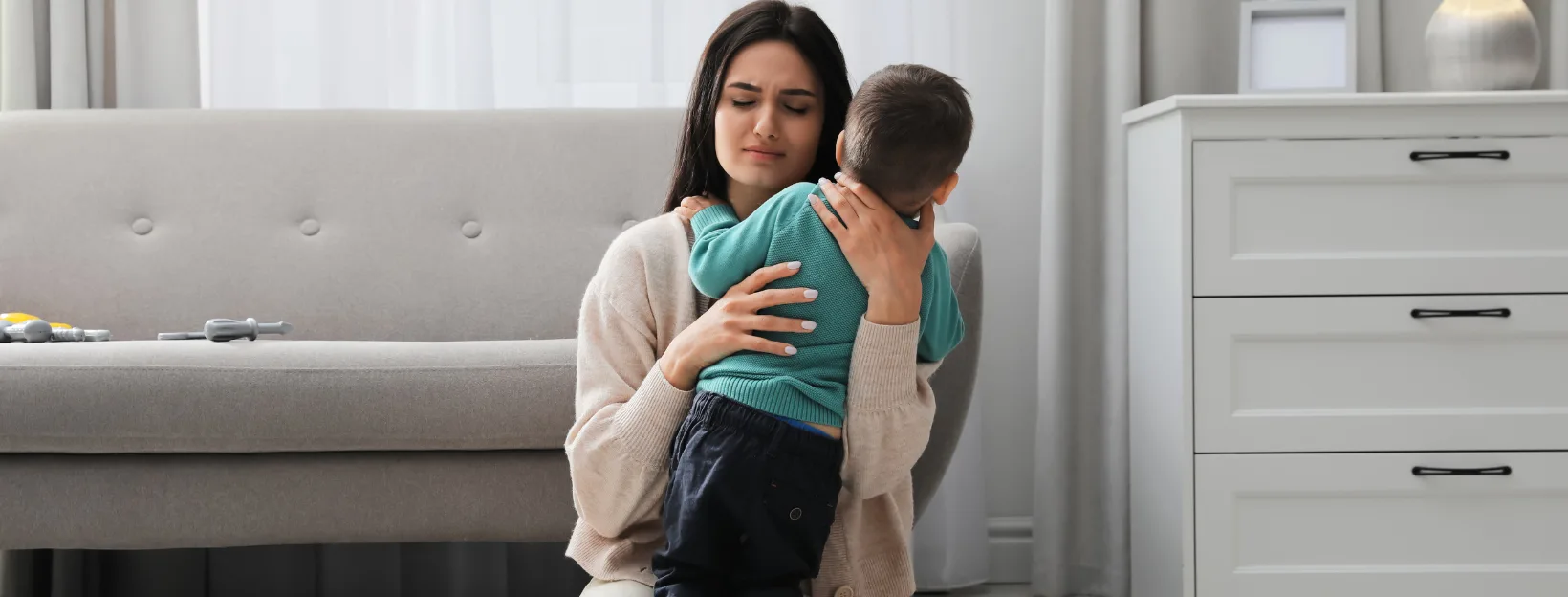
Myth #1: "Anxiety in kids is rare."
Anxiety disorders are the most common mental-health condition in children and adolescents, with prevalence estimates typically reported in the range of 7–10% of children in a given year and roughly 20–30% cumulative by adolescence. (1) Many more kids have subclinical anxiety that causes real impairment without meeting diagnostic thresholds. This is not an edge-case condition. This is a common condition that most parents are not calibrated to see.
Myth #2: "My child is just sensitive — it's their personality."
Temperament and anxiety are related but distinct. A temperamentally cautious child is more likely to develop anxiety, but the developed anxiety is a separate phenomenon with a different trajectory and different intervention needs.
The distinguishing question: is the caution causing impairment? If "sensitive" means the child chooses quieter activities and is generally happy, that's temperament. If "sensitive" means missing school, avoiding peers, chronic stomachaches, sleep disruption, or excessive reassurance-seeking — that's an anxiety presentation that warrants attention, regardless of whether it "runs in the family."
Myth #3: "Treating anxiety means medicating a kid."
The first-line treatment for childhood anxiety is not medication. It's CBT with exposure components. (1) Most childhood anxiety responds well to CBT alone. Medication — typically an SSRI — is reserved for cases where CBT isn't sufficient, and is usually deployed alongside therapy, not instead of it.
The newer approach called SPACE (Supportive Parenting for Anxious Childhood Emotions), developed by Eli Lebowitz at Yale, works by training parents to reduce accommodation behaviors and support their child through anxiety without restructuring the family around avoidance. It has been shown to be as effective as CBT with the child in randomized trials. (3)
Neither of those is medication. Neither is scary. Both are time-limited and evidence-based.
Myth #4: "Stomachaches mean an allergy or GI issue."
Sometimes. But the pattern matters more than the symptom. Recurrent abdominal pain timed to school mornings, predictable social events, or stressful activities — and resolving when the activity is removed — is almost always anxiety presenting somatically. (4)
This is not malingering. The pain is real. The autonomic nervous system's response to anxiety produces genuine visceral sensation. The fix is not a GI workup. It's addressing the anxiety.
Before a child goes through extensive medical testing for unexplained recurrent abdominal pain or headaches, anxiety screening should be part of the workup. It often isn't.
The Numbers That Matter
| What's happening | The data | Source |
|---|---|---|
| Prevalence of anxiety disorders in children | ~7–10% in a given year; cumulative prevalence higher by adolescence | (1) |
| CBT response rate in pediatric anxiety | ~50–70% respond to CBT alone | (1) |
| SPACE (parent-based) treatment | Noninferior to child CBT in randomized trials | (3) |
| Sleep and anxiety bidirectional relationship | Sleep disturbance predicts worsening anxiety; anxiety worsens sleep | (2) |
| Somatic presentations | Recurrent abdominal pain and headaches frequently driven by anxiety | (4) |
| Blood-sugar stabilization and mood | Glucose dysregulation contributes to mood symptoms in children | (5) |
| Accommodation behavior by parents | Predicts worse long-term anxiety outcomes | (3) |
Wait, Really? Blood Sugar Is in This Conversation
Here's a piece most parents have never considered.
A child whose meals are heavily processed, skip protein, and spike-then-crash their blood glucose has a nervous system running on a rollercoaster. The symptoms of reactive hypoglycemia — shakiness, irritability, anxiety, sudden emotional volatility, poor focus — overlap almost perfectly with what gets labeled "anxiety" or "behavioral issues." (5)
Before adding a therapy referral (which is still often the right move), consider: is this child starting the day with protein and fat, or a bowl of cereal and juice? Are they eating at regular intervals? Is the after-school meltdown happening at the exact time blood glucose would be bottoming out from a carb-heavy lunch?
Stabilizing the glucose curve is not a substitute for addressing genuine anxiety — but it's a remarkably common confound, and a fraction of kids who get referred for anxiety evaluation improve substantially with simple dietary changes (protein at every meal, limited sugar, no skipped meals, consistent eating times).
The Avaneuro Childhood Anxiety module includes the metabolic audit explicitly because this is a commonly missed contributor — and because it's free and reversible if you catch it.
What Actually Works

1. Learn the quiet signs. Excessive reassurance-seeking. Avoidance patterns. Somatic complaints timed to specific situations. Sleep disruption. Perfectionism. Irritability around certain triggers. These are the signals. If any are present consistently, you are probably looking at anxiety, not personality.
2. Fix sleep first. Bidirectional relationship between anxiety and sleep is well-documented. (2) Sleep disruption worsens anxiety; anxiety worsens sleep. Sleep hygiene protocols — consistent timing, cool/dark/quiet room, no screens before bed, morning outdoor light — often reduce anxiety symptoms substantially without any other intervention.
3. Audit the metabolic picture. Protein at every meal. Limited processed sugar. No skipped meals. Consistent eating times. If your "anxious" child is eating a high-carb, low-protein pattern, this could be driving a substantial portion of the symptom load. (5)
4. Reduce accommodation behaviors. Work on not restructuring the family to avoid the child's anxiety triggers. Help them face the hard thing with your calm support. "We're going to the party. I know it feels scary. I'll be nearby. You can do this." The SPACE framework has specific protocols. (3)
5. Get a proper evaluation if symptoms are persistent. A child psychologist or psychiatrist with specific training in pediatric anxiety is worth finding. The field is specialized enough that general pediatric advice often underperforms. Ask specifically about CBT with exposure and about SPACE.
6. Don't catastrophize, and don't dismiss. The two common errors are opposite. "My kid has anxiety, this is a disaster" → catastrophizing, which models anxiety. "My kid doesn't have anxiety, they just need to toughen up" → dismissing, which delays intervention. Both are counterproductive. The middle position is: "This is a common, treatable condition, and we're going to get the right help."
7. Model emotional regulation yourself. Anxiety has a substantial heritable component, and parental anxiety that's visible to the child shapes the child's response to stress. If you're working on your own anxiety too, you are doing the child a favor. This is one reason adult mental-health care is often family mental-health care.
The Bottom Line
Anxiety in children is common, quiet, and often missed. The kid who isn't the disruptive one in class — the one with the stomachaches, the reassurance questions, the homework perfectionism, the hard bedtimes, the chronic cautiousness — may be carrying a real, treatable condition that everyone around them is attributing to personality.
The upside of catching it early is enormous. Childhood anxiety, addressed in elementary school with CBT, SPACE, sleep optimization, and metabolic basics, very often resolves. Left alone, it entrenches, generalizes, and in adolescence becomes one of the leading mental-health burdens in the country.
At Avaneuro, the Childhood Anxiety module lays out the full recognition checklist, the evidence-based interventions (including how to find a therapist who actually does exposure-based CBT and not just talk therapy), and the metabolic and sleep foundations that multiply the effectiveness of any treatment. Because the child who is anxious doesn't need someone to rescue them from the anxiety. They need someone to see it clearly, and to help them build — slowly, in safe increments — the evidence that they can handle hard things.
Quiet suffering is still suffering. You can see it if you know what to look for.
Go deeper: This article builds on Avaneuro's Childhood Anxiety: Evidence-Based Strategies module — the full protocols, tools, and cited evidence base.
Related reading
- The Science of Tantrums: What's Actually Happening in Your Toddler's Brain
- The Neuroscience of Attachment: Why "Independence Training" Backfires
- Emotional Regulation Is a Skill You Teach — Not a Trait They're Born With
- Building Resilience: What Actually Works (Hint: Not "Letting Them Fail")
References
- Walter, H.J., et al. (2020). Clinical Practice Guideline for the Assessment and Treatment of Children and Adolescents with Anxiety Disorders. Journal of the American Academy of Child and Adolescent Psychiatry, 59(10), 1107–1124. https://doi.org/10.1016/j.jaac.2019.02.014
- Alvaro, P.K., et al. (2019). The Association Between Insomnia and Anxiety Symptoms: A Systematic Review and Meta-Analysis. Sleep Medicine, 66, 258–269. https://doi.org/10.1016/j.sleep.2019.10.018
- Lebowitz, E.R., et al. (2020). Parent-Based Treatment as Efficacious as Cognitive-Behavioral Therapy for Childhood Anxiety: A Randomized Noninferiority Study of Supportive Parenting for Anxious Childhood Emotions (SPACE). Evidence-Based Mental Health. https://doi.org/10.1136/ebmental-2021-300277
- Korterink, J.J., et al. (2015). Epidemiology of Pediatric Functional Abdominal Pain Disorders: A Meta-Analysis. PLoS One. [Related review].
- Firth, J., et al. (2024). Nutritional Psychiatry and Mood in Youth: A Narrative Review. Nutrients, 17(9), 1496. https://doi.org/10.3390/nu17091496