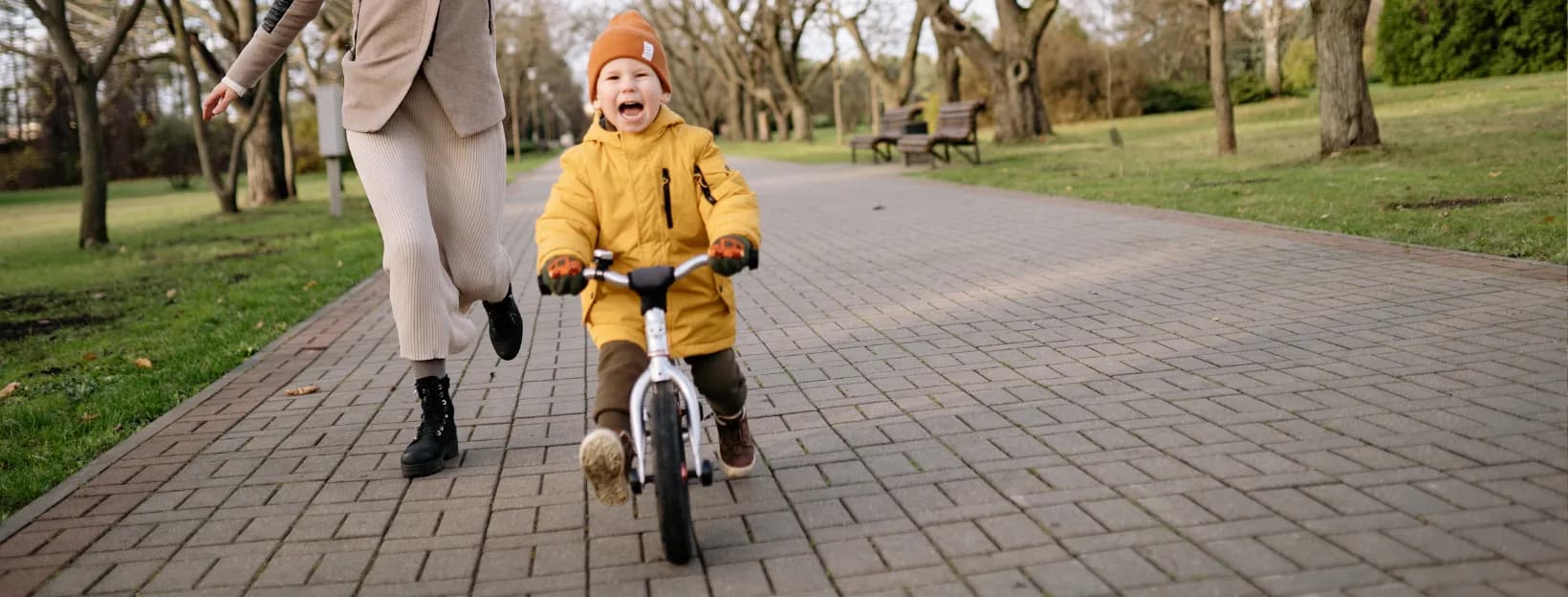
Bilateral Coordination Drills and the Corpus Callosum: What Moving Both Hands Does for Your Child's Brain
How crossing the midline in play and exercise strengthens the neural bridge that links thinking, learning, and movement
Watching a child pat their head while rubbing their stomach feels like a party trick. It is not. It is a window into one of the brain's most demanding integration challenges — and a surprisingly useful indicator of how well the two hemispheres are talking to each other.
That conversation happens across the corpus callosum, a dense band of white matter fibers connecting the left and right sides of the brain. What happens when children practice bilateral coordination — activities that require both hands (or both sides of the body) to work together — has real implications for motor development, learning, and cognition. Here is what the science actually says, and what you can do with it.
What "Bilateral Coordination" Actually Means
Bilateral coordination is not simply using both hands. It means the hands are doing something organized together — one stabilizing while the other manipulates, or both moving in complementary rhythmic patterns. Think cutting paper, tying shoelaces, climbing a ladder, drumming, or catching and throwing.
The neural demands are steep. Skilled bimanual finger movements require intense functional coupling of the motor areas of both cerebral hemispheres (Gerloff et al., Acta psychologica, 2002). An extended cortical network activates — including bilateral primary sensorimotor cortex, supplementary motor area, cingulate motor area, dorsal premotor cortex, and posterior parietal cortex (Gerloff et al., Acta psychologica, 2002). That is a large portion of the brain firing in coordination for a task as simple as opening a jar.
The Corpus Callosum: More Than a Bridge
The corpus callosum is the primary structural route for this cross-hemisphere signaling. Its role in bimanual control becomes starkly clear when it is compromised. In patients who have undergone corpus callosotomy (surgical cutting of the callosum, sometimes performed for severe epilepsy), total section interrupts interhemispheric communication between motor regions — resulting in deficits in bimanual coordination and apraxia of the non-dominant hand to verbal commands (Sauerwein et al., Journal of neurosurgical sciences, 1997).
Corpus callosum pathology also specifically impairs the ability to maintain temporally independent limb movements, particularly anti-phase patterns (where the two hands move in opposite rhythms rather than mirroring each other) (Wiesendanger et al., Progress in brain research, 2004). Anti-phase coordination is harder than in-phase coordination, which is why alternating arm movements — marching, crawling, alternating arm swings — are developmentally significant milestones.
The callosum does not just ferry motor commands. The superior frontal gyrus, a region implicated in working memory and cognitive control, connects to its counterpart in the opposite hemisphere via a callosal fiber bundle (Briggs et al., Clinical anatomy (New York, N.Y.), 2020). This means disruptions to callosal integrity can affect cognitive functions well beyond movement.
Why the Early Phase of Learning Matters Most
Here is a nuance worth knowing: interhemispheric interaction is especially critical during the early phase of learning a new bimanual task, not necessarily once that task becomes automatic (Gerloff et al., Acta psychologica, 2002). When a child first attempts a new bilateral skill — say, learning to use scissors — the two hemispheres are negotiating command integration intensively. As practice accumulates, efficient "motor routines" are established and that negotiation becomes less effortful (Gerloff et al., Acta psychologica, 2002).
This has a practical implication. The window when a child is learning a new bilateral skill is precisely when the corpus callosum is being recruited most heavily. Varied, novel bilateral challenges — not just repetition of mastered skills — keep this system actively engaged.
Callosal Development, Plasticity, and Why Timing Matters
Children's brains are not small adult brains. Callosotomy performed before puberty is not followed by permanent disconnection deficits in the same way adult surgery is — likely attributable to the greater neural plasticity of the immature brain (Sauerwein et al., Journal of neurosurgical sciences, 1997). This cuts both ways: early damage is often better compensated for, but it also means early experience shapes callosal organization during a sensitive period.
Prematurity is a concrete example of how early disruption matters. Preterm birth is associated with altered white matter microstructure, including reduced fractional anisotropy — a measure of white matter tract organization — in regions critical to motor and cognitive function (Zhou et al., Journal of obstetrics and gynaecology : the journal of the Institute of Obstetrics and Gynaecology, 2024). Parents of preterm children should discuss with their pediatric team whether targeted motor therapy is warranted; the evidence base here is evolving, and individual assessments matter.
There is also an aging dimension that reframes why childhood skill-building is important. Older adults show significantly lower quality of motor performance compared to younger adults on sensorimotor learning tasks, with differences in how motor-related brain activity is lateralized (Chettouf et al., Human brain mapping, 2022). The coordination patterns children develop in early life become the neural scaffold they carry across decades.
What Good Bilateral Drills Actually Look Like
You do not need specialized equipment. The goal is progressive novelty — introducing new patterns that require both sides of the body to do something coordinated and slightly unfamiliar.
For toddlers and preschoolers (ages 2–5):
- Rolling and catching a large ball with two hands
- Simple clapping games and pat-a-cake variations
- Pouring water between containers
- Large bead threading (one hand holds, one threads)
For school-age children (ages 6–12):
- Jumping jacks and cross-crawl movements (touching opposite elbow to knee)
- Skipping (a genuinely complex bilateral pattern many children need explicit practice with)
- Drumming with alternating hands to a rhythm
- Sports that require bilateral asymmetry: swimming strokes, tennis, rock climbing
For children with motor difficulties: Cerebellar or callosal pathology can produce marked intermanual desynchronization — the two hands fail to initiate or time their movements together (Wiesendanger et al., Progress in brain research, 2004). Adaptive strategies can partially compensate, but rarely correct deficits completely (Wiesendanger et al., Progress in brain research, 2004). If your child consistently struggles with tasks that require the two sides of the body to cooperate — not just clumsiness, but a persistent inability to sequence bilateral movements — a referral to a pediatric occupational therapist for formal assessment is appropriate.
A Note on What We Don't Yet Know
The research on bilateral coordination and corpus callosum function is robust in neurological patients and adult populations. The direct, controlled evidence that specific bilateral drills in typically developing children measurably strengthen callosal microstructure is thinner. Studies like those examining interhemispheric coherence during bimanual learning (Gerloff et al., Acta psychologica, 2002) establish the neural mechanism clearly; the dose-response question — how much practice, what type, at what age — is still being worked out. Claims that any single activity "rewires" a child's brain in a guaranteed, measurable way should be treated with appropriate skepticism.
What is well-supported: bilateral movement activates an extensive, integrative cortical network (Gerloff et al., Acta psychologica, 2002); the corpus callosum is essential to coordinated two-handed skill (Sauerwein et al., Journal of neurosurgical sciences, 1997) (Wiesendanger et al., Progress in brain research, 2004); and callosal fibers connect regions involved in cognition and motor control (Briggs et al., Clinical anatomy (New York, N.Y.), 2020). The case for making bilateral movement a consistent part of childhood play and physical education is solid, even as the precise mechanisms continue to be studied.
If your child struggles with tasks like scissors, catching, or alternating movements significantly beyond their peers, speak with your pediatrician about a referral to a pediatric occupational therapist. Early assessment opens more options.
Free from Avaneuro: the Avaneuro Child Development Assessment — a free personalized assessment.
References
- Gerloff et al. (2002). Bimanual coordination and interhemispheric interaction.. Acta psychologica. https://pubmed.ncbi.nlm.nih.gov/12102104/
- Sauerwein et al. (1997). Neuropsychological alterations after split-brain surgery.. Journal of neurosurgical sciences. https://pubmed.ncbi.nlm.nih.gov/9273860/
- Wiesendanger et al. (2004). The quest to understand bimanual coordination.. Progress in brain research. https://pubmed.ncbi.nlm.nih.gov/14653191/
- Briggs et al. (2020). Anatomy and White Matter Connections of the Superior Frontal Gyrus.. Clinical anatomy (New York, N.Y.). https://pubmed.ncbi.nlm.nih.gov/31749198/
- Zhou et al. (2024). Alteration of fractional anisotropy in preterm-born individuals: a systematic review and meta-analysis.. Journal of obstetrics and gynaecology : the journal of the Institute of Obstetrics and Gynaecology. https://pubmed.ncbi.nlm.nih.gov/38984803/
- Chettouf et al. (2022). Unimanual sensorimotor learning-A simultaneous EEG-fMRI aging study.. Human brain mapping. https://pubmed.ncbi.nlm.nih.gov/35133058/