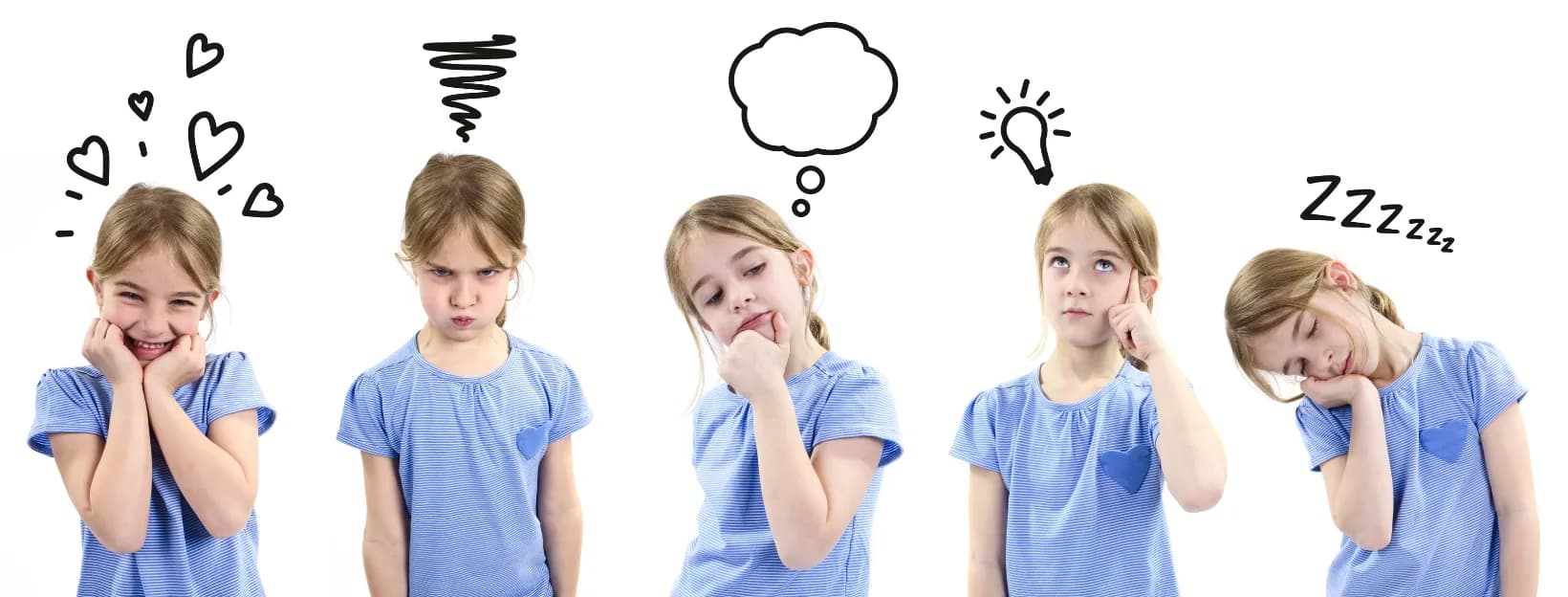
Co-Regulation Before Self-Regulation: Why a Dysregulated Parent Can't Calm a Child
Your nervous system is your child's first teacher — and it's always in session.
There's a moment most parents know: your child is melting down, you're already running on empty, and nothing you try is working. You raise your voice. They escalate. You feel worse. They feel worse. What's happening in that loop isn't a parenting failure — it's biology. Two nervous systems are talking to each other, and right now, neither one is saying anything calming.
This is the core of co-regulation: the process by which a caregiver's physiological and emotional state directly shapes a child's ability to settle. It sounds intuitive, but the science behind it is more precise — and more actionable — than most parents realize.
What Co-Regulation Actually Means (Biologically)
Co-regulation isn't just soothing words or a warm hug, though those matter. It's a physiological process. Before children develop the brain architecture for self-regulation, they borrow their caregiver's regulated nervous system to do the job.
Infants are almost entirely dependent on caregivers for this. Their prefrontal cortex — the part of the brain responsible for top-down emotional control — is essentially offline (Nguyen et al., Developmental cognitive neuroscience, 2022). The vagal system, which governs the body's calm-and-connect response, is still maturing (Nguyen et al., Developmental cognitive neuroscience, 2022). This means the infant has no independent mechanism to bring themselves down from high arousal. They need an external scaffold.
That scaffold is you.
As children grow, they gradually internalize co-regulatory support and build their own regulatory capacity (Baker et al., Journal of autism and developmental disorders, 2019). But this internalization depends heavily on the quality of co-regulation they've received. Children with autism spectrum disorder, for instance, show particular vulnerability here — parental scaffolding quality uniquely predicts emotion dysregulation in dyadic contexts, above and beyond the child's own symptom severity (Fenning et al., Journal of autism and developmental disorders, 2018).
How a Parent's Arousal Transmits to a Child
The transmission is not metaphorical. It's measurable.
Research tracking mother-infant pairs during face-to-face interaction found that maternal emotion dysregulation disrupted the synchrony of parasympathetic nervous system activity between mothers and infants (Gao et al., Psychophysiology, 2023). In plain terms: when a mother's own regulatory system is struggling, her infant's ability to regulate parasympathetic arousal suffers too — in real time.
The voice is one key vehicle. In naturalistic, day-long home recordings, anxious caregivers were more likely to vocalize intensely during moments of high arousal, and these intense vocalizations were associated with more sustained increases in autonomic arousal for both the caregiver and the infant (Smith et al., Development and psychopathology, 2023). It wasn't just that anxious caregivers said more — it was that high arousal in one member of the dyad became more likely to coincide with high arousal in the other (Smith et al., Development and psychopathology, 2023).
Put simply: a dysregulated parent voice doesn't soothe. It amplifies.
This bidirectional contagion isn't a sign of bad parenting. It's a design feature of the attachment system, one that normally serves children well. Caregivers and infants are wired to be sensitive to each other's states. The problem arises when the caregiver's system is chronically dysregulated and has nothing calm to transmit.
The Parent's Own Regulation Is Not Optional
This is where the research gets uncomfortable — and important.
Supportive parent reactions to children's negative emotions are associated with higher baseline respiratory sinus arrhythmia (RSA) in children — a biomarker of regulatory capacity — while unsupportive reactions are linked to poorer physiological regulation (Moffitt et al., Research on child and adolescent psychopathology, 2021). RSA is not a soft psychological measure; it indexes how flexibly the autonomic nervous system can respond to stress. A child with low baseline RSA is physiologically less equipped to handle emotional challenges.
The implication is significant: parenting behavior doesn't only shape how a child acts. It shapes how their body handles stress at a physiological level (Moffitt et al., Research on child and adolescent psychopathology, 2021).
And this extends into adolescence. Research examining mother-daughter pairs found that during negative interactions, mothers of daughters with non-suicidal self-injury histories were significantly more reactive to fluctuations in their daughters' physiological arousal compared to mothers of daughters without that history (James et al., Journal of child psychology and psychiatry, and allied disciplines, 2024). The co-regulatory relationship — for better or worse — remains active and measurable well into the teenage years (James et al., Journal of child psychology and psychiatry, and allied disciplines, 2024).
A parent who is burned out, anxious, or chronically stressed isn't failing to co-regulate on purpose. But the biology doesn't make exceptions.
What This Looks Like in Daily Life
Several parent states make effective co-regulation harder:
Chronic anxiety. Anxious caregivers produce more intense, clustered vocalizations during high-arousal moments — and this predicts more sustained physiological arousal in their infants (Smith et al., Development and psychopathology, 2023). Anxiety treatment is therefore not separate from parenting support; it is parenting support.
Exhaustion from a child with difficult early behavior. Parents of infants with persistent crying or sleep problems experience significant stress that can erode their own regulatory capacity (Singh et al., Frontiers in psychiatry, 2021). Day-clinic interventions targeting both infant and parent simultaneously show promise here — because treating the child without supporting the parent misses half the system (Singh et al., Frontiers in psychiatry, 2021).
Dysregulated reactions to a child's distress. Fathers' and mothers' parenting behaviors both dynamically associate with infant physiological emotion regulation during interactions (Tissot et al., Infant behavior & development, 2026). Harsh or dismissive responses to infant distress — even well-intentioned ones like "stop crying, you're fine" — carry physiological weight, not just psychological weight.
Mind-blindness. Maternal mind-mindedness — the capacity to read infant cues in terms of underlying mental states rather than just behavior — predicts lower infant anger reactivity (Wade-Bohleber et al., Frontiers in psychology, 2026). A parent who can wonder "what is my child feeling right now?" is already doing something neurobiologically useful, even before they act on the answer.
Practical Steps Parents Can Take
None of this is meant to generate guilt. It's meant to redirect effort toward what actually works.
Regulate yourself first, literally. Slow your breathing before you approach a dysregulated child. Your autonomic state is what your child's nervous system will read first. Even 30 seconds of slow exhales shifts your own RSA.
Lower your voice, slow your speech. The intensity and clustering of vocalizations is a measurable driver of infant and child arousal (Smith et al., Development and psychopathology, 2023). A quieter, slower voice signals safety to your child's nervous system — not weakness.
Seek support for your own anxiety or depression. This isn't self-indulgent. Maternal emotion dysregulation directly disrupts infant parasympathetic regulation during interaction (Gao et al., Psychophysiology, 2023). Treating a parent's mental health is a direct intervention for child outcomes.
For children with ASD or other regulatory challenges, quality scaffolding — structured, warm, attuned guidance through difficult moments — has specific physiological effects beyond what behavioral strategies alone achieve (Fenning et al., Journal of autism and developmental disorders, 2018) (Northrup et al., Journal of the American Academy of Child and Adolescent Psychiatry, 2026). These children often need more explicit co-regulatory support for longer, not less.
Don't wait for meltdown. Co-regulation is most effective when it begins early in an escalation cycle, not at the peak. Noticing early signals — a clenched jaw, faster movement, a shift in voice — and responding then is far more effective than trying to calm a child who is already at full arousal.
Your child isn't looking for a perfect parent. They're looking for a regulated one — regulated enough, often enough. That's a goal worth working toward, and it starts with understanding what your nervous system is already communicating.
If you're concerned about your child's emotion regulation or your own mental health, speak with your pediatrician or a licensed mental health professional. Early support makes a meaningful difference.
References
- Nguyen et al. (2022). Coupling between prefrontal brain activity and respiratory sinus arrhythmia in infants and adults.. Developmental cognitive neuroscience. https://pubmed.ncbi.nlm.nih.gov/36495790/
- Baker et al. (2019). A Cross-Sectional Examination of the Internalization of Emotion Co-regulatory Support in Children with ASD.. Journal of autism and developmental disorders. https://pubmed.ncbi.nlm.nih.gov/31201578/
- Fenning et al. (2018). Intrinsic and Extrinsic Predictors of Emotion Regulation in Children with Autism Spectrum Disorder.. Journal of autism and developmental disorders. https://pubmed.ncbi.nlm.nih.gov/29926292/
- Gao et al. (2023). Dynamics of mother-infant parasympathetic regulation during face-to-face interaction: The role of maternal emotion dysregulation.. Psychophysiology. https://pubmed.ncbi.nlm.nih.gov/36637055/
- Smith et al. (2023). Vocalization and physiological hyperarousal in infant-caregiver dyads where the caregiver has elevated anxiety.. Development and psychopathology. https://pubmed.ncbi.nlm.nih.gov/35105411/
- Moffitt et al. (2021). Parental Socialization of Emotion and Psychophysiological Arousal Patterns in Children with Autism Spectrum Disorder.. Research on child and adolescent psychopathology. https://pubmed.ncbi.nlm.nih.gov/33459921/
- James et al. (2024). Self- and co-regulation of physiological activity during mother-daughter interactions: The role of adolescent non-suicidal self-injury.. Journal of child psychology and psychiatry, and allied disciplines. https://pubmed.ncbi.nlm.nih.gov/37469027/
- Singh et al. (2021). Helping Families of Infants With Persistent Crying and Sleep Problems in a Day-Clinic.. Frontiers in psychiatry. https://pubmed.ncbi.nlm.nih.gov/33716810/
- Tissot et al. (2026). Dynamic associations between mothers' and fathers' parenting behaviors and infant physiological emotion regulation.. Infant behavior & development. https://pubmed.ncbi.nlm.nih.gov/42269373/
- Wade-Bohleber et al. (2026). Parental and infant predictors of infant anger and fear reactivity.. Frontiers in psychology. https://pubmed.ncbi.nlm.nih.gov/41725654/
- Northrup et al. (2026). Review and Developmental Model: Early Childhood Emotion Regulation and Co-Regulation in Autism.. Journal of the American Academy of Child and Adolescent Psychiatry. https://pubmed.ncbi.nlm.nih.gov/40907886/