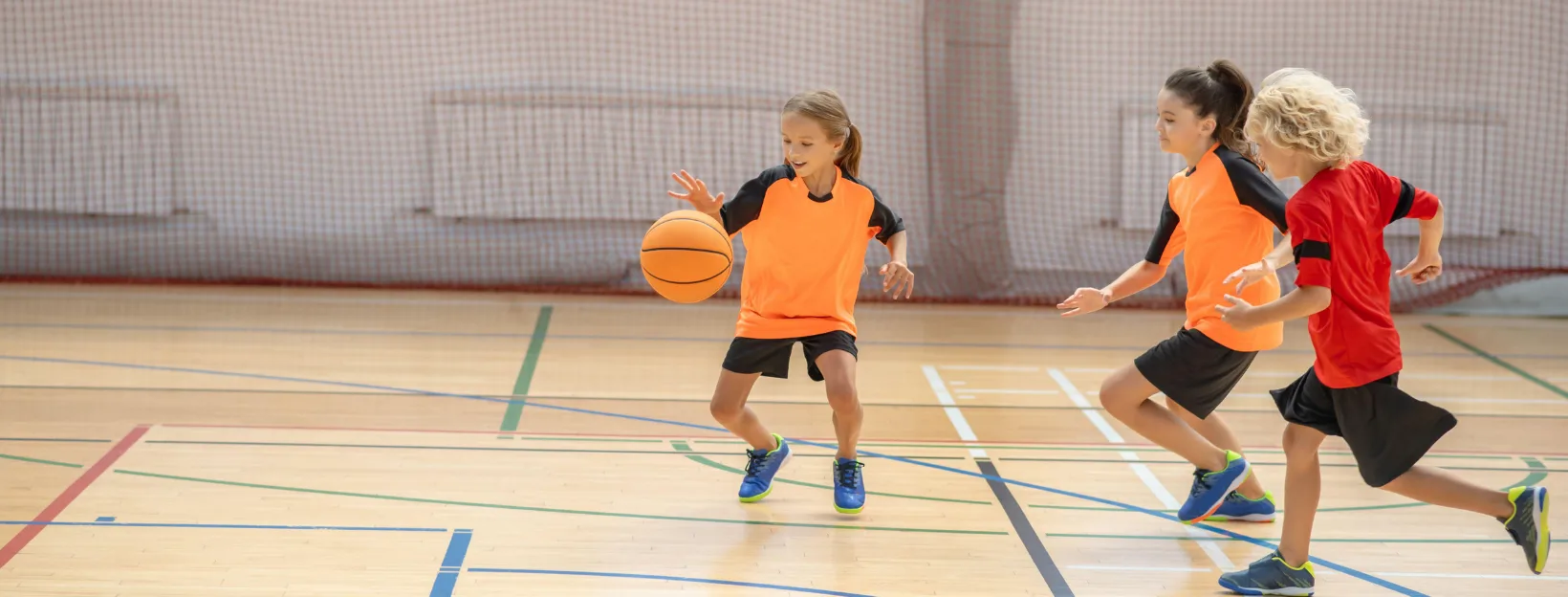
How Movement Builds Your Child's Brain (Not Just Their Body)
Physical movement increases BDNF — brain-derived neurotrophic factor — the protein that drives neural growth and plasticity. Modern American children move about half as much as their grandparents did. The brain is paying the cost.
"Go outside and run around" used to be the default of childhood. Now it's a scheduled activity, if it happens at all. Most American elementary school children spend the majority of their waking hours seated — in school, in after-school programs, in cars, on screens. Recess has shrunk. PE has been cut in many districts. Free play outdoors is a fraction of what it was two generations ago.
And the emerging literature on exercise neuroscience makes it clear that this isn't just a fitness issue — it's a cognitive one.
Physical movement directly affects brain function through several well-documented mechanisms:
1. BDNF release. Exercise — particularly moderate-to-vigorous aerobic activity — increases brain-derived neurotrophic factor, a protein sometimes called "Miracle-Gro for the brain." BDNF supports neuron survival, synapse formation, and neuroplasticity. Children who exercise regularly have higher resting BDNF and mount larger BDNF responses to cognitive challenges. (1)
2. Neurotransmitter regulation. Exercise increases dopamine, norepinephrine, and serotonin acutely — the same neurotransmitters targeted by ADHD medications. It's been called "nature's medication" for attention.
3. Cerebrovascular benefit. Exercise improves blood flow to the brain, oxygen delivery, and glucose availability — the inputs cognition runs on.
4. Structural brain changes. Children who exercise regularly show measurably larger hippocampal volume (memory), better prefrontal connectivity (executive function), and improved white matter integrity. (2)
5. Executive function improvements. Exercise acutely and chronically improves attention, working memory, inhibitory control, and task-switching — the suite of skills called executive function.
The effects are large enough that meta-analyses of exercise interventions in children consistently find improved academic performance, better attention, and reduced behavioral problems. (3)
The Neuroscience of the Moving Body
The old frame was: the body is for moving, the brain is for thinking, they're separate. The current frame is: the brain evolved to guide a moving body, and it's calibrated by movement.
Several pieces:
Cerebellum. Traditionally thought of as a motor coordination center. Now understood to play major roles in cognition, language, and executive function. Cerebellar development depends on motor experience. Kids who don't move enough during developmental windows have measurably different cerebellar development.
Vestibular system. Inner-ear balance and spatial orientation. Drives development of spatial awareness, attention, and some aspects of literacy (visual-spatial processing). Swinging, spinning, rolling, hanging upside-down — all vestibular input that's become scarce in modern children's lives.
Proprioception. The sense of body position in space. Develops through active physical exploration — climbing, crawling, carrying heavy things, pulling, pushing. Under-developed proprioception shows up in kids as clumsiness, poor fine motor control, and difficulty sitting still (because they can't feel their body well enough to position it).
Bilateral integration. Using both sides of the body together. Crossing midline with both hands. Supports reading, writing, and focus. Develops through active movement.
All of these systems develop through use. A child who sits most of the day, moves on adult-directed schedules, and experiences little vestibular input arrives at school with systems that haven't been exercised — which then shows up as attention problems, clumsiness, and behavioral dysregulation that gets labeled as pathology rather than disuse.
At Avaneuro, the three movement modules (infant, toddler, school-age) treat movement as brain-building, not as "physical education" separate from cognitive development.
How Much Movement Is Enough
The current consensus recommendations from pediatric and sports medicine:
- Infants (0–12 months): Floor time, tummy time, varied positioning, reach for objects. Avoid excessive container use (bouncers, strollers, car seats beyond what's necessary).
- Toddlers (1–3): At least 3 hours per day of varied physical activity spread across the day.
- Preschoolers (3–5): At least 3 hours per day of varied activity, at least one hour of which should be moderate-to-vigorous.
- Children and adolescents (6–17): At least 60 minutes per day of moderate-to-vigorous physical activity, with muscle-strengthening activities at least 3 days/week. (4)
Most American children don't meet these minimums. Among 6–11 year olds, only about 42% meet the 60-minute daily guideline; among 12–15 year olds, the number drops to around 24%.
And the quality matters alongside the quantity. Unstructured outdoor play develops proprioception and vestibular sense differently than structured indoor sports. Climbing trees, running over uneven ground, balancing on logs, digging in dirt — these deliver sensorimotor inputs that a gymnasium PE class can't fully replicate.
The Myths That Are Costing You
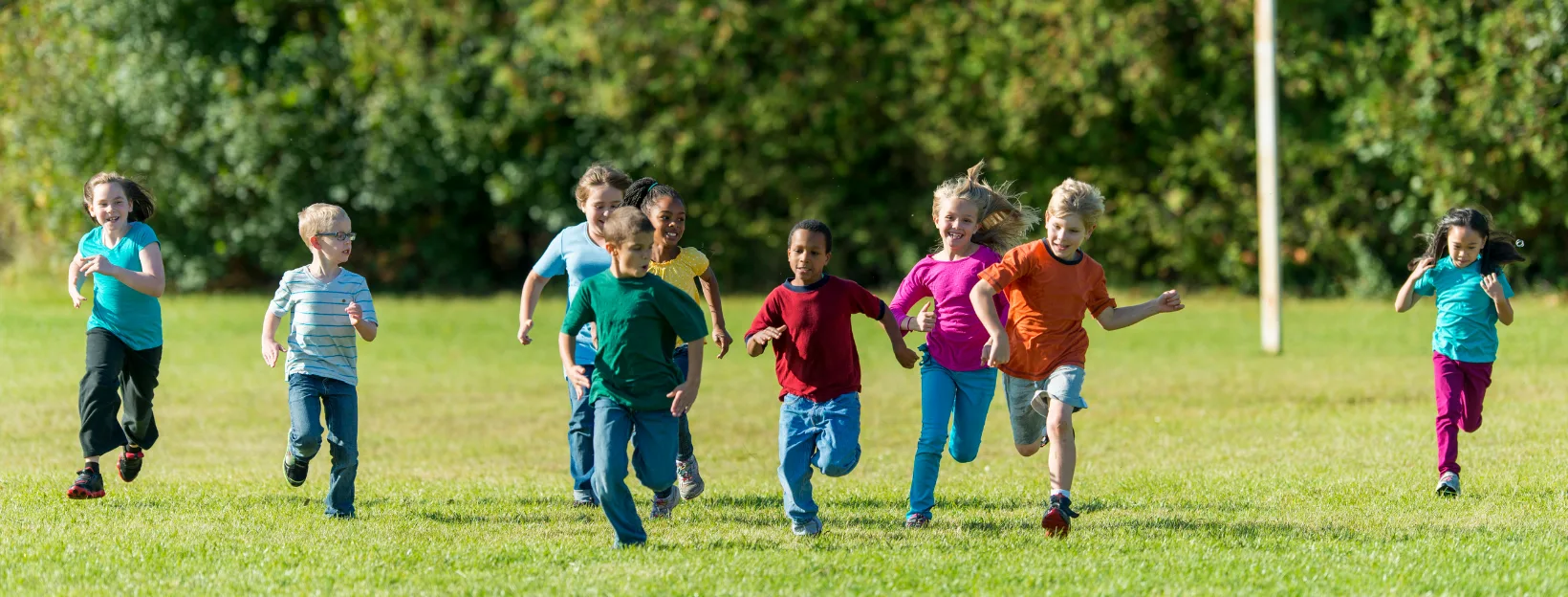
Myth #1: "They get PE at school — that covers it."
Most schools provide far less PE than the recommendations call for. Many elementary schools have only one or two PE sessions per week, 30–45 minutes each. Even daily PE at that length doesn't meet the 60-minute guideline on most days.
Recess has been cut in many districts under pressure for more instructional time — a trade that has backfired for learning outcomes in the research that's been done on it.
School-based movement is supplemental. It's not sufficient.
Myth #2: "Organized sports is enough."
Organized sports are valuable but have a specific profile: scheduled, structured, often with significant downtime (on the sideline, on the bench). A two-hour soccer practice three times a week doesn't necessarily deliver 60+ minutes of moderate-to-vigorous movement daily.
Organized sports should complement, not replace, free unstructured outdoor play and daily movement throughout the day.
Myth #3: "Moving them during the school day would hurt academics."
The opposite. Schools that have added movement — walking meetings, standing desks, active classrooms, mid-day movement breaks, longer recess — consistently show stable or improved academic performance, better behavior, and fewer disciplinary issues. (3)
The trade-off is imagined. More movement = better learning. The research is remarkably consistent.
Myth #4: "If they're fidgety, they need to sit still more."
Backwards. A child who can't sit still is often a child whose sensorimotor system is under-stimulated and is seeking input to regulate. The intervention isn't more sitting; it's more movement, especially proprioceptive and vestibular input — climbing, swinging, jumping, pushing/pulling.
Kids who get adequate daily movement show better ability to sit when sitting is appropriate. Kids who don't get movement, forced to sit, become the "fidgety" or "disruptive" kids.
The Numbers That Matter
| What's happening | The data | Source |
|---|---|---|
| Exercise and BDNF | Exercise increases BDNF, supporting neuroplasticity | (1) |
| Hippocampal volume in fit vs. unfit children | Measurably larger hippocampus in physically fit children | (2) |
| Meta-analysis of exercise on academic performance | Consistent positive effects on academic outcomes | (3) |
| WHO physical activity recommendation for children | 60+ min/day moderate-to-vigorous for ages 6–17 | (4) |
| U.S. compliance with movement recommendations | ~42% of 6–11 year olds; ~24% of 12–15 year olds | CDC data |
Wait, Really? Exercise Changes the ADHD Picture

A growing body of research has shown that exercise — particularly vigorous aerobic exercise — produces measurable reductions in ADHD symptoms in children, sometimes approaching the effect size of stimulant medication for short durations. (See ADHD article.)
The mechanism is direct: exercise acutely increases dopamine, norepinephrine, serotonin, and BDNF — the exact same neurotransmitter systems that stimulant medications target.
The implication isn't "exercise cures ADHD." Some kids genuinely need medication, and medication can be life-changing. The implication is: a child with ADHD or ADHD-pattern symptoms who isn't getting regular vigorous exercise is missing one of the highest-leverage non-pharmacological interventions available. An hour of morning running before school changes the day. Daily outdoor play changes the week.
For kids with mild attention concerns, sometimes exercise alone is enough. For kids who need medication, exercise makes the medication work better.
The Avaneuro ADHD & Neurodevelopment module integrates the movement protocol specifically because the evidence supports that movement is not optional for the neurodivergent child.
What Actually Works

1. Outdoor time, daily, year-round. Rain, snow, cold, heat — kids can be dressed for it. The total volume of outdoor time across the week is the biggest lever. Aim for 2+ hours daily when possible; more on weekends.
2. Free play over structured activities. Unstructured play on interesting terrain (parks with trees, nature areas, backyard with varied features) delivers sensorimotor inputs organized sports can't. Prioritize this alongside any structured activities.
3. Limit stroller and car seat time beyond necessity. For infants and toddlers, time spent strapped into containers is time not moving. Floor time, varied positioning, reaching, rolling. For older kids, walking/biking instead of driving when feasible.
4. Active transport when possible. Walk or bike to school if distance allows. Walk to the library, the park, the store. These daily movement minutes add up across a year.
5. Sports as supplement, not replacement. If your child is in a competitive sport, great — but it doesn't replace the need for daily free movement.
6. Stand-up and movement breaks during homework and screen time. Every 30 minutes, 5 minutes of movement. Jump, stretch, run around, climb stairs. Short, frequent bouts help maintain attention and prevent the full sit-still-for-hours pattern.
7. Climbing, hanging, swinging, rolling — the upside-down inputs. Monkey bars. Tree climbing. Swings. Rolling down hills. These vestibular and proprioceptive inputs are under-delivered in modern kids' lives and disproportionately important for sensorimotor development.
8. Model it. Active parents have active kids. A family that walks together, bikes together, hikes together, and prioritizes outdoor activity is building lifelong movement habits.
9. Push back on schools that cut recess. Advocacy at the school board level makes a difference. Schools that prioritize movement show better academic outcomes; this is well-documented and worth advocating for. (3)
10. Don't confuse exhaustion with enough movement. A child who's emotionally exhausted from a long school day isn't necessarily physically saturated. Often the opposite — they've been under-moved all day and need to run around to discharge. Outdoor time before homework, not after.
The Bottom Line
Movement is infrastructure for the developing brain, not decoration on top of it. The brain evolved to guide a moving body, and when the body doesn't move enough, the brain's development is compromised in specific, measurable ways. BDNF, hippocampal growth, executive function, attention, neurotransmitter balance, sleep quality — all are downstream of adequate physical activity.
Modern American childhood has systematically reduced the movement opportunities a child encounters in a typical day. The consequences show up as "fidgety" kids, "can't focus" kids, "behavioral" kids, obesity, rising mental-health burden, and a generation whose sensorimotor systems haven't been properly exercised.
The intervention is free, ancient, and obvious. More outside. More unstructured play. Less sitting. Less container time. Active transport. Adequate recess. Movement throughout the day, not once scheduled at 3 PM.
At Avaneuro, the movement modules across all age stages treat physical activity as one of the three developmental pillars alongside sleep and nutrition — because the research supports that level of priority, and because it's one of the cheapest and highest-impact interventions a family can make.
Put the kids outside. Let them run. The brain they're building depends on it.
Go deeper: This article builds on Avaneuro's Movement as Brain Training: School-Age module — the full protocols, tools, and cited evidence base.
Related reading
- Why 3 Hours Outside a Day Is Not Optional for a Child's Brain
- Posture and Cognition: Why Slouching Costs Your Child More Than You Think
- Sensory Processing: Why Some Children Melt Down Over a Sock Seam
References
- Hillman, C.H., et al. (2008). Be Smart, Exercise Your Heart: Exercise Effects on Brain and Cognition. Nature Reviews Neuroscience, 9(1), 58–65. https://pubmed.ncbi.nlm.nih.gov/18094706/
- Chaddock, L., et al. (2010). A Neuroimaging Investigation of the Association Between Aerobic Fitness, Hippocampal Volume, and Memory Performance in Preadolescent Children. Brain Research, 1358, 172–183. https://pubmed.ncbi.nlm.nih.gov/20735996/
- Donnelly, J.E., et al. (2016). Physical Activity, Fitness, Cognitive Function, and Academic Achievement in Children: A Systematic Review. Medicine & Science in Sports & Exercise, 48(6), 1197–1222. https://pubmed.ncbi.nlm.nih.gov/27182986/
- World Health Organization. (2020). WHO Guidelines on Physical Activity and Sedentary Behaviour. https://www.who.int/publications/i/item/9789240015128