EMFs and Developing Brains: Separating the Data From the Hype
The EMF conversation has been hijacked by both sides. One camp says "it's all fine, stop worrying." The other says "it's causing everything." The useful middle is specific, measurable, and worth knowing.
Electromagnetic fields (EMFs) are an area where the information environment is uniquely unhelpful. Mainstream medical guidance tends toward reassurance that non-ionizing radiation from cell phones, WiFi, and other common sources is harmless. Alternative-health guidance tends toward alarm that EMFs are causing cancer, infertility, insomnia, and a generalized civilizational malaise.
Both positions oversimplify. The useful middle — which is what parents actually need — goes something like this:
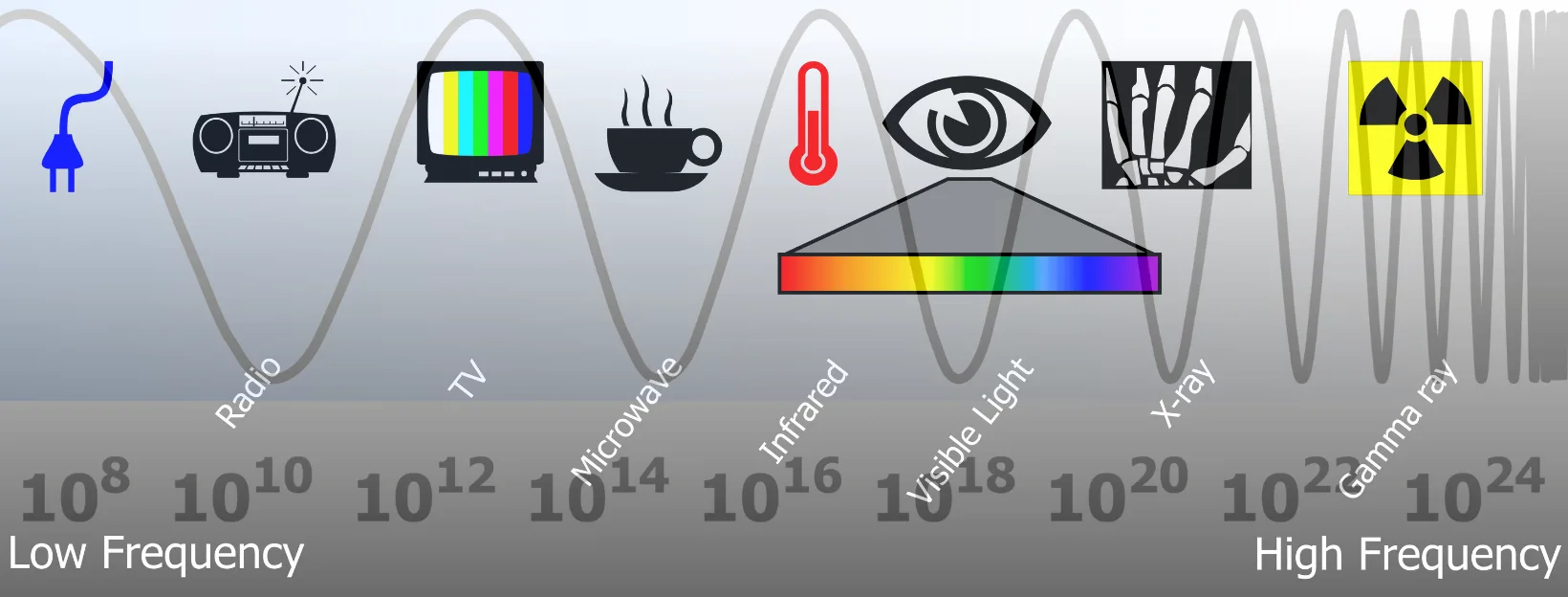
- High-dose ionizing radiation (X-rays, gamma rays, high UV) is unambiguously harmful and is carefully regulated for medical use.
- Non-ionizing radiation (radio waves, microwaves, WiFi, cell signals) cannot directly damage DNA the way ionizing radiation can. That part of the reassurance is correct.
- But "cannot directly damage DNA" is not the same as "has no biological effect." There is a real, published literature on non-thermal biological effects of non-ionizing EMFs — oxidative stress, altered cellular signaling, possible effects on sleep and melatonin, and in some studies, genotoxicity through indirect mechanisms. (1)
- The International Agency for Research on Cancer (IARC) classified radiofrequency electromagnetic fields as "possibly carcinogenic to humans" (Group 2B) in 2011 based on limited evidence for an association between cell phone use and glioma. (2) This is the same category as pickled vegetables — not a screaming red flag, but not nothing either.
- Children's exposure profile differs from adults. Thinner skulls, more conductive tissue, higher relative dose per body weight, and longer lifetime cumulative exposure starting earlier.
The honest conclusion: the mechanistic and epidemiological evidence is mixed, the effects (if any) at typical exposures are probably modest, and reasonable prudence in a developmental context costs almost nothing. We're not in "panic" territory. We're in "prudent avoidance" territory.
This article is the specific version of what prudent avoidance actually looks like.
Types of EMF and Relative Concern
Not all EMFs are equivalent. The practical categories:
1. Extremely low frequency (ELF) — from power lines, wiring, appliances. Decades of epidemiology on childhood leukemia and proximity to high-voltage power lines. IARC classified ELF magnetic fields as Group 2B (possibly carcinogenic) in 2002. Effects are most documented for chronic high exposures (living near high-voltage lines).
2. Radiofrequency (RF) — from cell phones, WiFi, Bluetooth, cordless phones, smart meters. The largest recent research base. IARC Group 2B classification. (2) Some national guidelines recommend precaution for children specifically.
3. Low-frequency magnetic fields from devices held close to the body. Laptops on laps, phones in pockets, cordless phones against heads. Dose depends heavily on proximity (drops off with the square of distance).
4. "Dirty electricity" — high-frequency harmonics on household wiring. Produced by dimmer switches, LED drivers, solar inverters, some electronics. Emerging concern, less research.
5. Dielectric heating — microwave ovens, 5G millimeter-wave. Well-characterized thermal effects at sufficient power; 5G millimeter-wave biology is actively researched.
For practical purposes, the two categories most worth managing in a home with children are RF from personal devices (phones, tablets, WiFi routers) and proximity to strong magnetic-field sources (breaker panels, transformers, some appliances).
Why Children Are a Different Case
The general argument that children may be more affected by RF exposure than adults rests on several differences:
- Thinner skull bone. Adult skull thickness attenuates some RF energy before it reaches brain tissue. Children's skulls are thinner — RF penetrates further into neural tissue.
- Smaller head size. More of the total brain is within the RF penetration depth of a device pressed to the ear.
- Higher tissue water content. Increases RF energy absorption in neural tissue.
- Developing nervous system. Cellular division and myelination are ongoing, potentially more vulnerable to perturbation than mature stable tissue.
- Longer cumulative exposure. A child who starts using a smartphone at age 10 will have 60–80 years of daily RF exposure ahead of them. We don't have human data at that time scale.
For these reasons, countries including France, Belgium, Israel, and others have enacted precautionary measures specifically for children — restrictions on WiFi in elementary schools, bans on cell phone marketing to young children, recommended wired-connection usage. The U.S. has not followed suit, but the underlying reasoning is sound even absent regulatory action.
At Avaneuro, the EMF & Blue Light module is in the premium bonus content because the evidence is complicated enough that "here's what to do" needs actual framing, not a one-paragraph takeaway.
The Myths That Are Costing You
Myth #1: "Non-ionizing radiation can't cause any biological effect."
It can't directly break DNA the way ionizing radiation can. It can produce biological effects through other mechanisms: oxidative stress, altered voltage-gated calcium channel activity, melatonin suppression, and possibly effects on cellular signaling. (1) Some of these effects are mild at typical exposures. They are not zero.
The "non-ionizing is inherently safe" framing is an oversimplification that has propagated through science communication without fully reflecting the mechanistic literature.
Myth #2: "5G is especially dangerous."
Maybe, maybe not. The biological research on millimeter-wave (5G) frequencies is thinner than on standard 4G/LTE, because the technology is newer. Alarmist claims about 5G causing COVID or similar are not supported by any serious research. Claims that 5G might have subtly different biological effects than 4G at chronic exposures are speculatively defensible but not established.
Most of the "5G is everywhere" exposure is actually from the sub-6 GHz 5G bands, which are biologically similar to 4G LTE. The millimeter-wave 5G exists in limited urban deployments and has short range.
For a child's exposure profile, the phone in their pocket is a vastly larger RF source than the 5G tower a few blocks away.
Myth #3: "Airplane mode doesn't matter."
Airplane mode on a phone turns off the primary RF emitters (cellular, WiFi, Bluetooth). A phone in airplane mode in a child's pocket produces vastly less RF exposure than the same phone with radios active.
For children who use phones as video players, calculators, or offline tools, airplane mode during that use meaningfully reduces exposure without compromising the functionality they actually need.
Myth #4: "There's nothing parents can reasonably do."
There's quite a bit. Distance is your friend (RF drops off with the square of distance — a phone 12 inches away delivers 1/100th the field strength of one pressed to the head). Wired connections beat wireless. Airplane mode when radios aren't needed. Devices off overnight. These are all cheap, simple, and cumulatively meaningful.
The Numbers That Matter
| What's happening | The data | Source |
|---|---|---|
| IARC classification of RF-EMF | Group 2B, "possibly carcinogenic to humans" (2011) | (2) |
| IARC classification of ELF magnetic fields | Group 2B (2002) | IARC |
| Non-thermal biological effects of RF | Documented in peer-reviewed literature, mechanisms include oxidative stress, calcium channel effects | (1) |
| Children's RF absorption | Thinner skulls, smaller heads → deeper tissue penetration per exposure | Reviewed in (1) |
| Inverse-square falloff | Field strength drops with square of distance — small distance = huge reduction | Physics |
Wait, Really? Your Router Is on All Night for No Reason
A WiFi router running 24/7 is continuously emitting RF in the 2.4 GHz and 5 GHz bands. In most households, nobody uses WiFi between 11 PM and 6 AM. The router runs anyway.
Two simple interventions:
- Router on a timer — mechanical or smart outlet timer, router off from, say, 11 PM to 6 AM. No RF in the house during sleep hours. Also has the side benefit of enforcing device-off time for anyone who tries to scroll before bed.
- Router location — not in a bedroom, not in the room where a child spends the most time. The router can be in a closet, hallway, or office space with the door open.
Neither of these is a heroic intervention, and either substantially reduces one of the more continuous RF exposures in a modern home.
What Actually Works

1. Wired connections for stationary devices when possible. Ethernet for gaming consoles, desktops, smart TVs. One-time setup; lower RF; faster and more stable anyway.
2. Keep phones away from the body when possible. Phone on the table, not in the pocket. Speaker or wired headphones for calls (Bluetooth headsets are themselves RF emitters — wired is preferable). Airplane mode when not actively using.
3. WiFi router off overnight. Mechanical or smart timer. Eliminates RF for 6–8 hours of each day at no functional cost.
4. No phones or tablets in children's bedrooms. Overlap with the sleep hygiene conversation, but same intervention. Charging station outside the bedroom. If the device must be in the room, airplane mode.
5. Distance matters. Use it. A phone on speaker 18 inches from a child's head delivers a tiny fraction of the exposure of one pressed to their ear. Speakers over earbuds (especially for children). Tablets on a stand, not on the lap.
6. For young children, minimize cell phone use specifically. Not "never" — but not "handed the phone to watch videos for an hour with it inches from their face." If they're watching a screen, put it on a stand at arms-length distance.
7. Avoid cordless phones (DECT) in frequently occupied areas. DECT base stations emit continuously. If you still use a cordless phone, pick models with "eco mode" or equivalent that reduce base station emissions when not in active use.
8. Be cautious about smart meters. Some utilities allow opt-out. If your smart meter is installed on the exterior wall of a bedroom, inquire about options — a wall isn't great attenuation for RF.
9. For the intellectually curious, an RF meter ($150–300) is informative. Not necessary, but it demystifies a lot. You can see immediately which devices are strong emitters, how much distance attenuates, and what rooms are quiet versus saturated.
10. Don't let the perfect be the enemy of the good. The goal is reasonable reduction, not a lead-lined bunker. Most of the benefit comes from a few simple distance and duration adjustments. Everything beyond that has diminishing returns.
The Bottom Line
The EMF conversation is complicated enough that reasonable people land in different places. The useful framework for parents is: the mechanistic and epidemiological literature includes enough signal to justify prudent avoidance, and prudent avoidance costs almost nothing. Keep phones off the body. Wire what can be wired. Turn off the router overnight. Don't put devices in bedrooms. Let distance be your ally — it's physics, and it works.
None of this requires panic. None of it requires conspiratorial frameworks. None of it requires expensive shielding products (most of which are marketing). It requires a few one-time habit adjustments that also happen to produce better sleep hygiene, better digital habits, and better attention patterns as side benefits.
At Avaneuro, the EMF & Blue Light module takes the long view: we don't know definitively what chronic RF exposure starting in childhood does over 70 years, because the experiment hasn't finished yet. Your child is in that experiment whether you want them to be or not. Small reasonable mitigations now are cheap insurance against whatever the eventual verdict turns out to be.
Distance. Duration. Device-off overnight. That's most of the prudent-avoidance playbook.
Go deeper: This article builds on Avaneuro's EMF & Blue Light Exposure module — the full protocols, tools, and cited evidence base.
Related reading
- Lead Is Still in Your House. Here's Where to Look.
- Mercury, Fish, and Your Child's Developing Brain: What's Safe and What's Not
- VOCs from Furniture and Paint Are Measurably Hurting Your Child's IQ
- Mold and the Developing Brain: Why Mycotoxins Are an Under-Diagnosed Cause of Behavior Problems
References
- Belpomme, D., et al. (2018). Thermal and Non-Thermal Health Effects of Low Intensity Non-Ionizing Radiation: An International Perspective. Environmental Pollution, 242(Pt A), 643–658. https://pubmed.ncbi.nlm.nih.gov/30025338/
- International Agency for Research on Cancer. (2011). IARC Classifies Radiofrequency Electromagnetic Fields as Possibly Carcinogenic to Humans (Press Release 208). https://www.iarc.who.int/wp-content/uploads/2018/07/pr208_E.pdf