
Personal Care Products Are a Hormonal Disaster for Kids. Here's What to Replace First.
The European Union has banned or restricted over 1,500 chemicals from personal care products. The United States has restricted about 30. Everything else is fair game for what's in your kid's shampoo.
The regulation gap between the EU and the US for personal care is one of the cleanest illustrations of how permissive the American consumer-product system is. Europe operates on a precautionary principle: chemicals with endocrine-disrupting, carcinogenic, or developmental-toxicity signals are banned or restricted until demonstrated safe. The U.S. operates on a "presumed safe until proven unsafe beyond doubt" principle, which is why a lot of ingredients the EU pulled in the 1990s–2010s are still in American shampoo, lotion, toothpaste, and sunscreen.
Where this matters most: children have thinner skin, more surface area per body weight, and developing endocrine systems. The dose per kilogram from a given topical product is higher. The developmental window during which that dose matters is narrow. And unlike with food, the absorption happens through skin, which has essentially no gut-level filtration.
Your child's personal care routine — shampoo, body wash, lotion, sunscreen, toothpaste, diaper cream, detergent — is a continuous, daily exposure to whatever's in the formulations. Choosing better versions is one of the highest-ROI swaps available to most families. You're not eliminating an exposure; you're changing what's in the exposure.
The Ingredients to Avoid
Fragrance (labeled "fragrance" or "parfum"). An exempt category that can contain literally dozens of undisclosed chemicals — typically including phthalates to make the scent stick. "Fragrance" on a label is essentially a regulatory loophole for not disclosing what's actually in the product.
Phthalates (DEP, DBP, DEHP, BBP, etc.). Plasticizers; endocrine disruptors; documented anti-androgenic effects in male infants with prenatal exposure. (1) Often hidden behind "fragrance."
Parabens (methyl-, ethyl-, propyl-, butylparaben). Preservatives; estrogen-mimicking activity; detected in human breast tissue. Substantial evidence of endocrine effects at cumulative exposures.
Triclosan and triclocarban. Antimicrobials; endocrine effects; contribute to antimicrobial resistance. Banned by FDA in most consumer soaps in 2016, but still present in some toothpastes and other products.
Formaldehyde and formaldehyde-releasing preservatives (DMDM hydantoin, diazolidinyl urea, imidazolidinyl urea, quaternium-15). Known carcinogen; sensitizer.
Oxybenzone, octinoxate, homosalate, avobenzone. Chemical sunscreen filters with endocrine-disrupting activity; some detected in breast milk and blood. Physical (mineral) sunscreens (zinc oxide, titanium dioxide) are safer alternatives.
Sodium lauryl sulfate (SLS) and sodium laureth sulfate (SLES). Surfactants; can be contaminated with 1,4-dioxane (probable carcinogen) during manufacturing.
PEGs (polyethylene glycols) and ethoxylated ingredients. May be contaminated with 1,4-dioxane and ethylene oxide.
PFAS. Some waterproof mascara, long-wear foundation, some "stay-on" products. Covered in the endocrine disruptor article.
Benzene. Recently detected as a contaminant in some aerosol sunscreens, dry shampoos, and other products. Known carcinogen.
Talc. Historically sometimes contaminated with asbestos. Check for "asbestos-free" certification or avoid talc-based products for children.
Coal tar and petroleum-derived ingredients (paraffin, petrolatum). Can contain PAH contaminants depending on refinement grade. "USP grade" petrolatum is considered safe; other grades less so.
The Highest-Priority Swaps
Not every product matters equally. In order of priority for reducing exposure:
1. Lotions and moisturizers. Applied to large skin surface, multiple times daily, absorbed well. If one product gets swapped to clean, make it the daily lotion.
2. Sunscreen. Applied liberally, to large surface area, absorbed well, often reapplied. Chemical sunscreens (oxybenzone, etc.) are the biggest concern. Switch to mineral-only (zinc oxide, titanium dioxide) with a "non-nano" specification if possible.
3. Shampoo and conditioner. Regular exposure, direct scalp absorption. Look for sulfate-free, paraben-free, fragrance-free or essential-oil scented.
4. Body wash and bubble bath. Skin-contact exposure. Bubble bath specifically can cause urinary tract irritation in young children even without endocrine concerns.
5. Toothpaste. Swallowed by young children. Fluoride considerations aside, look for formulations without SLS, triclosan, artificial sweeteners, synthetic dyes.
6. Diaper cream. Applied to sensitive skin under occlusion. Zinc oxide formulations with minimal other ingredients are the cleanest choice.
7. Laundry detergent. Residues remain on fabric and skin-contact. Fragrance-free, dye-free, low-enzyme.
8. Dryer sheets and fabric softener. Often the highest source of in-home fragrance exposure. Wool dryer balls as alternative.
9. Deodorant/antiperspirant. Not applicable to young children, but worth flagging for teens. Aluminum-free deodorants (note: deodorants, not antiperspirants) are widely available.
10. Cosmetics and "kids" makeup. Heavy metal contamination, phthalates. If used, check EWG ratings per product.
At Avaneuro, the Personal Care module walks through the specific brand recommendations and what to look for on a label — because "clean" and "natural" as marketing terms are meaningless, but third-party certifications (EWG Verified, MADE SAFE, USDA Organic) have real meaning.
The Myths That Are Costing You
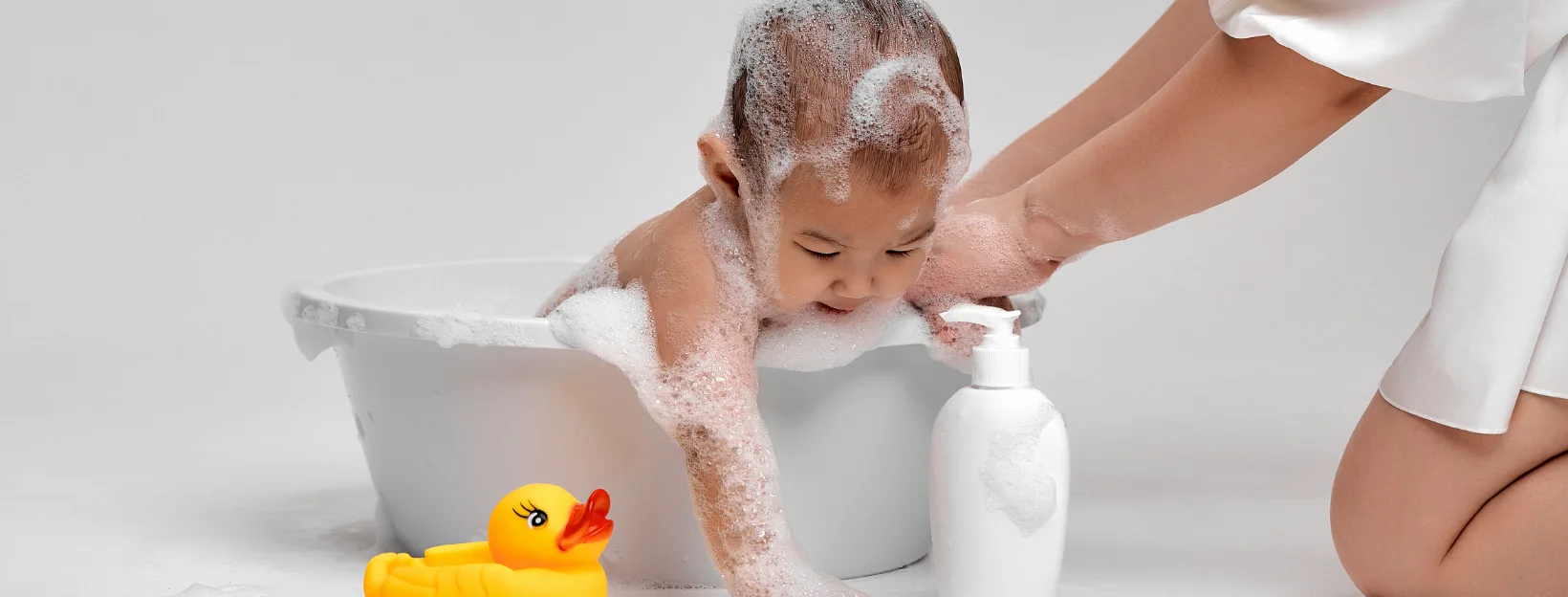
Myth #1: "'Natural' or 'pure' on the label means safe."
Marketing terms with no regulatory definition. A product labeled "natural" can contain virtually any ingredient. Look for: EWG Verified, MADE SAFE, COSMOS, USDA Organic (for the products that qualify), Leaping Bunny (cruelty-free, separate issue).
Myth #2: "Baby products are formulated to be gentler/safer."
Often yes, in being gentler to skin. Not necessarily in avoiding endocrine disruptors, phthalates, or formaldehyde-releasing preservatives. The "baby" category is marketing, not a regulatory standard. Check ingredient lists regardless.
Myth #3: "A small amount can't matter."
The dose per kilogram from a topical product for a 25-pound child is 7x what the same product delivers to a 175-pound adult. Compounded across years of daily exposure during critical developmental windows, "a small amount" is the exact framing that has produced the cumulative body burdens measured in urinary biomonitoring studies.
Individual exposures are small. Total load across the day, week, month, year is not.
Myth #4: "If it's sold in the U.S., it must be safe."
The FDA does not require safety testing of most personal care products before they're sold. The agency can act against specific ingredients after harm is demonstrated, but the system is reactive, not proactive. This is the key structural difference from the European system. (2)
The Numbers That Matter
| What's happening | The data | Source |
|---|---|---|
| U.S. personal care product regulation | FDA does not require pre-market safety testing; ~30 ingredients banned or restricted | (2) |
| EU personal care product regulation | ~1,500 chemicals banned or restricted; precautionary principle | European Commission |
| Phthalate exposure and male infant development | Anti-androgenic effects documented with higher prenatal exposure | (1) |
| Paraben detection in human tissue | Documented in breast tissue, urinary biomarkers | Literature |
| Chemical sunscreen absorption | Oxybenzone and other filters detected in blood and breast milk after typical use | (3) |
| Dose per kg | Children get higher per-kg doses from topical products due to body weight and surface area | Toxicology consensus |
Wait, Really? Sunscreen Enters the Bloodstream

FDA research has demonstrated that chemical sunscreen ingredients — oxybenzone, avobenzone, octocrylene, ecamsule — are absorbed through skin at levels that exceed the FDA threshold for requiring further safety studies. (3)
This doesn't mean "don't use sunscreen." It means use mineral-based sunscreen (zinc oxide, titanium dioxide) which sits on skin surface, scatters UV physically, and doesn't absorb systemically.
Mineral sunscreens have downsides — they can leave a visible tint (cosmetically unappealing for many adults), and "nano" formulations designed to go on clear have their own debated concerns. For children specifically:
- Mineral only (zinc oxide primary, titanium dioxide acceptable)
- Non-nano if possible
- Avoid chemical filters (oxybenzone, octinoxate, octocrylene, avobenzone, homosalate)
- Avoid spray sunscreens (inhalation exposure)
- Reapply as directed — protection matters; which product delivers the protection matters too
What Actually Works
1. Audit your current personal care products against EWG's Skin Deep database. Free, searchable, rates products 1–10. Aim for 1–3 across your family's daily-use products. Check everything — shampoo, lotion, sunscreen, toothpaste, laundry detergent.
2. Replace the top three most-used products first. Usually: lotion, shampoo, sunscreen. One-time swap, immediate exposure reduction.
3. Eliminate fragranced products. Every fragranced item in the house is a phthalate delivery vehicle. Fragrance-free detergent, fragrance-free soap, fragrance-free deodorant (for teens), fragrance-free lotion. "Fragrance-free" > "unscented" (unscented can still have masking fragrances).
4. Switch to mineral-only sunscreen. Zinc oxide-based. Multiple good brands (Badger, Thinksport, Blue Lizard — check current formulations). Non-nano if available. For children specifically, this is worth getting right.
5. Simpler formulations, fewer ingredients. A shampoo with 6 recognizable ingredients is usually cleaner than one with 40. Not a perfect rule, but a useful heuristic.
6. Check seal/certifications. EWG Verified, MADE SAFE, USDA Organic, COSMOS Organic. These are meaningful third-party standards. "Natural," "pure," "clean," "dermatologist-tested" are not.
7. Minimize product count. Fewer products in rotation = less total exposure. Many families use far more personal care products than children actually need.
8. For laundry, make this a permanent switch. Fragrance-free detergent, no fabric softener, wool dryer balls instead of dryer sheets. Your child's skin is against these residues for 23 hours a day.
9. Vet any new product before it comes home. Build the habit of checking EWG or the ingredient list before buying. Eventually the short list of trusted brands covers most needs.
The Bottom Line
Personal care is one of the cleanest cases for intervention because it's entirely in your control and it compounds. Each product swap is small. Collectively, they represent the difference between a child whose daily skin-contact exposures include dozens of endocrine-disrupting compounds and one whose don't.
The European market demonstrates that high-performing, cosmetically acceptable products can be formulated without most of the ingredients American products still use. The gap is not technical — it's regulatory. Which means American families have to opt into the higher standard themselves.
At Avaneuro, the Personal Care module provides a shopping guide organized by product category, with specific brand recommendations, label-reading guides, and the decision tree for which swaps matter most. Because "check every label" is untenable day-to-day, but "know the five brands I trust across these categories" is permanent.
One Saturday afternoon of inventory. A series of one-time purchases. And the daily exposure profile of your household drops permanently.
Go deeper: This article builds on Avaneuro's Personal Care & Hygiene Products module — the full protocols, tools, and cited evidence base.
Related reading
- Lead Is Still in Your House. Here's Where to Look.
- Mercury, Fish, and Your Child's Developing Brain: What's Safe and What's Not
- VOCs from Furniture and Paint Are Measurably Hurting Your Child's IQ
- Mold and the Developing Brain: Why Mycotoxins Are an Under-Diagnosed Cause of Behavior Problems
References
- Swan, S.H., et al. (2005). Decrease in Anogenital Distance Among Male Infants with Prenatal Phthalate Exposure. Environmental Health Perspectives, 113(8), 1056–1061. https://pubmed.ncbi.nlm.nih.gov/16079079/
- U.S. Food and Drug Administration. Cosmetics Safety Q&A: Prohibited Ingredients. https://www.fda.gov/cosmetics/cosmetics-laws-regulations
- Matta, M.K., et al. (2020). Effect of Sunscreen Application on Plasma Concentration of Sunscreen Active Ingredients. JAMA, 323(3), 256–267. https://pubmed.ncbi.nlm.nih.gov/31961417/