
The Pesticide-ADHD Connection: What Organophosphates Do to a Child's Brain
Every 10-fold increase in prenatal organophosphate exposure drops a child's IQ by 5.5 points. These compounds were originally developed as nerve agents for chemical warfare. We spray them on the food your kid eats.
If you wanted to design a chemical specifically engineered to derail a child's neurological development, you'd want it to:
- Inhibit acetylcholinesterase — the enzyme that clears acetylcholine from synapses (acetylcholine is the neurotransmitter underlying attention, learning, and memory)
- Generate oxidative stress in neurons
- Disrupt thyroid hormone signaling (thyroid is critical for brain development)
- Interfere with dopamine and serotonin systems
- Cross the placenta efficiently
- Be routinely present on food and in the air of agricultural communities
Organophosphate pesticides do all of these things. They were literally developed as nerve agents for chemical warfare in the 1930s. They were then repurposed as insecticides, which makes sense — the same mechanism that paralyzes an insect's nervous system also affects mammalian neurons, just at higher doses. We've spent the last 70 years spraying them on food crops.
The agricultural community has had this conversation privately for a long time. Farm workers have measurable cognitive effects from occupational exposure. Farm families living near sprayed fields have documented developmental deficits in their children. The CHAMACOS longitudinal study in California's Salinas Valley followed children from prenatal exposure through adolescence and found a consistent, dose-dependent relationship between prenatal organophosphate exposure and lower IQ, more attention problems, and more autism-spectrum traits. (1, 2)
Each 10-fold increase in prenatal organophosphate metabolites in maternal urine was associated with a 5.5-point drop in children's IQ at age 7. (1) That's comparable to the effect of lead — and these children weren't farm workers. Their exposure came through diet and residential proximity to agriculture.
For most American families, the primary exposure route is food. Which makes this the rare toxin conversation with a clear, actionable intervention: what you buy.
What Organophosphates Do in a Developing Brain
Acetylcholinesterase is the enzyme responsible for clearing acetylcholine from synapses after a neural signal has fired. When the enzyme is inhibited, acetylcholine accumulates, and signaling becomes chaotic — initially over-firing, eventually exhausting.
In the developing brain, acetylcholine isn't just a neurotransmitter — it's a signaling molecule for neurodevelopment itself. Neurons use cholinergic signaling to guide axon growth, synapse formation, and circuit refinement. Disrupting this during critical windows doesn't just impair signaling; it distorts the architecture being built.
The documented effects of prenatal/early childhood organophosphate exposure:
- Reduced IQ — documented in multiple cohorts; ~5.5 points per 10-fold increase in prenatal exposure (1)
- Attention and executive function deficits — persistent through adolescence in exposed cohorts (2)
- Autism-spectrum traits — higher prenatal exposure associated with more autism-related traits in children (2)
- Fine motor and coordination deficits — documented in agricultural-community cohorts
- Behavioral and emotional dysregulation — parallel findings across studies
The key: these effects are documented at exposure levels common in non-agricultural American populations. You don't have to live next to a sprayed field. Residues in conventional produce, air transport from agricultural regions, and lawn/garden chemical use all contribute.
At Avaneuro, the Food Quality module treats pesticide reduction as one of the highest-leverage nutrition interventions — because unlike most "eat healthier" advice, the mechanism is specific, the dose-response is documented, and the fix is operationally clear.
The "Dirty Dozen" Shortcut
The Environmental Working Group publishes an annual list — the Dirty Dozen — ranking conventional produce by pesticide residue load. The specific items rotate slightly year-to-year, but the categories are stable:
Reliably high pesticide residue (buy organic):
- Strawberries
- Spinach
- Kale, collards, mustard greens
- Peaches, nectarines
- Apples
- Pears
- Grapes
- Bell peppers and hot peppers
- Cherries
- Blueberries
- Green beans
- Tomatoes
Reliably low pesticide residue (conventional is fine):
- Avocados
- Sweet corn
- Pineapple
- Onions
- Papaya
- Frozen sweet peas
- Asparagus
- Honeydew melon
- Kiwi
- Cabbage
- Mushrooms
- Mangoes
- Watermelon
- Sweet potatoes
- Carrots
The practical translation: if you can't afford to buy everything organic, prioritize the Dirty Dozen list, and don't worry about the Clean 15. For a family of four, switching the top 5-8 items to organic typically adds $15–30/week — real money, but meaningfully less than "all organic."
Research has shown that switching children to an organic diet reduces urinary pesticide metabolites by roughly 90% within days. (3) The body clears these compounds relatively quickly; the issue is chronic re-exposure. Remove the exposure and the burden drops fast.
The Myths That Are Costing You

Myth #1: "If they regulated it, it must be safe."
The EPA registers pesticides as "safe" based primarily on studies submitted by the manufacturers. Independent academic research, when funded and conducted, has repeatedly found effects at doses below EPA-registered "safe" levels. The conflict of interest is structural.
The history of organophosphate regulation is instructive. Chlorpyrifos — one of the most studied organophosphates — was restricted for residential use in 2000 after decades of mounting evidence of neurodevelopmental harm. Its agricultural use continued until the EPA finally banned residential food-crop use in 2021, and even that decision has been litigated. The gap between what the research showed and what the regulation allowed was measured in decades.
Assume the system errs on the side of chemical approval. Adjust your own behavior accordingly.
Myth #2: "Washing removes pesticide residue."
Water washing alone removes a modest fraction — some surface residues, much of the ambient dust. It doesn't remove residues that have been absorbed into the flesh or skin of the fruit/vegetable.
Better washing protocols: baking soda soak has been shown to remove more pesticide residue than plain water — about 10 minutes in a 1% baking soda solution can significantly reduce surface residues. (4) Peeling removes more but also removes nutrients in the peel.
For items on the Dirty Dozen list, washing helps but doesn't reach the level of "safe." Buying organic is the more reliable intervention for high-residue items.
Myth #3: "Organic is a marketing scam."
Organic certification is imperfect but meaningful. USDA Organic prohibits most synthetic pesticides, synthetic fertilizers, and GMO crops. Multiple studies have demonstrated that organic-diet children have substantially lower urinary pesticide metabolites than conventional-diet children. (3)
"Organic" doesn't mean "pesticide-free" (some organic-approved pesticides exist, used less frequently and generally less toxic), but it does mean substantially lower residues of the specific synthetic pesticides that are most concerning for development.
The separate conversation about whether organic is "more nutritious" is less settled. The relevant question for this article isn't nutrition density; it's toxin exposure. On that, the evidence is clear.
Myth #4: "We don't live near farms, so this doesn't apply to us."
Residential pesticide use — lawn chemicals, mosquito fogging, indoor pest control, flea and tick treatments — contributes substantially to household exposure, often more than dietary exposure for urban and suburban families.
Key residential sources:
- Lawn care services spraying broadleaf herbicides and insecticides
- Mosquito control spraying (municipal or private)
- Indoor ant/roach treatments
- Flea treatments on pets (can contaminate bedding, carpet)
- Termite treatments
A lot of household pesticide exposure is avoidable. Integrated pest management (IPM) — sealing entry points, eliminating food/water sources, using targeted baits rather than sprays — is equally or more effective and dramatically less toxic.
The Numbers That Matter
| What's happening | The data | Source |
|---|---|---|
| Prenatal organophosphate exposure → IQ | ~5.5 IQ points lower per 10-fold increase in prenatal metabolites | (1) |
| Organophosphates and autism-related traits | Higher exposure → more autism-spectrum traits in CHAMACOS cohort | (2) |
| Organic diet and pesticide biomarkers | ~90% reduction in urinary organophosphate metabolites within days | (3) |
| Baking soda wash | Significantly reduces surface pesticide residues vs. water alone | (4) |
| Glyphosate | Most heavily used herbicide globally; gut microbiome and endocrine concerns documented | (5) |
Wait, Really? Glyphosate Is in Almost Everything
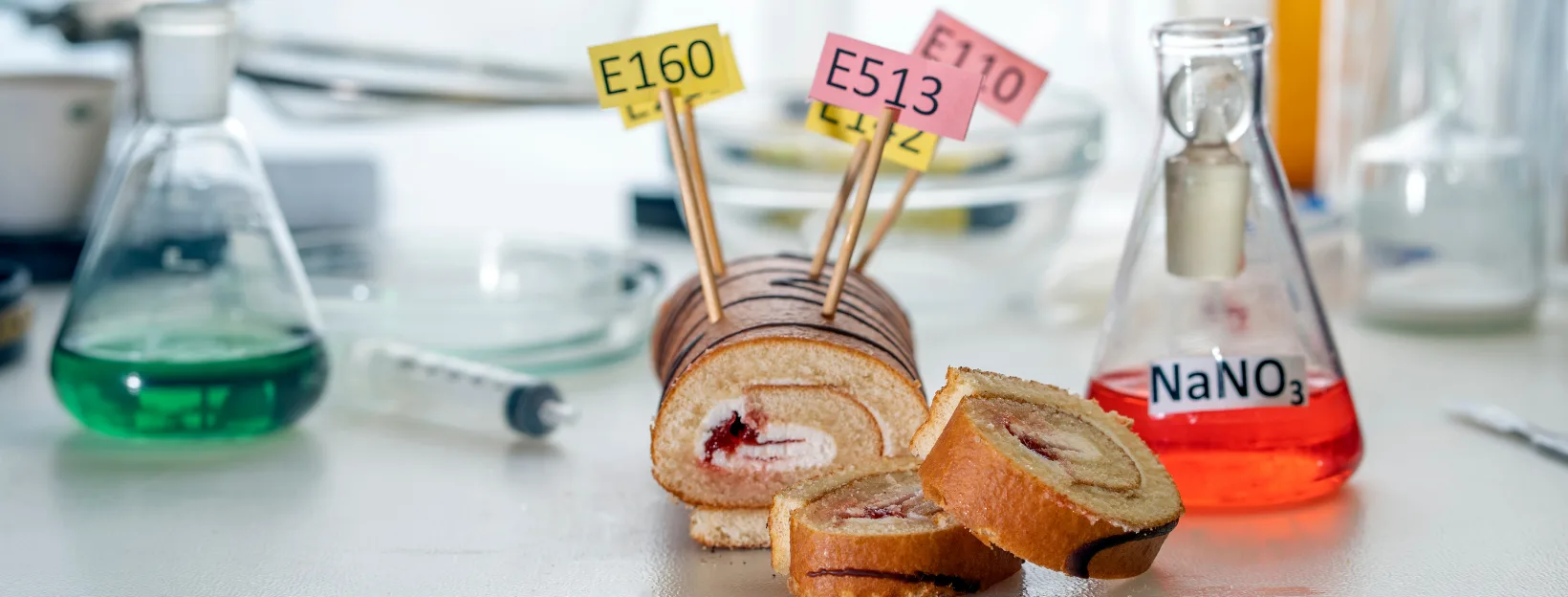
Glyphosate — the active ingredient in Roundup — is the most widely used herbicide in history. It's sprayed on GMO "Roundup Ready" crops (corn, soy, canola), used as a pre-harvest desiccant on wheat and oats in some countries, and applied to parks, lawns, playgrounds, golf courses, and rights-of-way.
The result: glyphosate residues are detectable in the majority of conventional food samples tested, and in the urine of most sampled American populations.
The mechanisms of concern are still being characterized:
- Glyphosate disrupts the shikimate pathway — a biochemical pathway absent in human cells but present in gut bacteria. This means glyphosate exposure may alter the gut microbiome, with downstream effects on immune function, inflammation, and (via the gut-brain axis) mood and behavior. (5)
- Some endocrine-disrupting effects have been demonstrated in laboratory and animal research.
- Animal studies have shown concerning effects on behavior and gut-brain signaling.
Human neurodevelopmental studies on glyphosate specifically are thinner than for organophosphates. This isn't because the science is reassuring — it's because the studies haven't been funded at scale, and the regulatory approval relied heavily on industry data.
For parents, the practical implication is clearer with glyphosate than with some other conversations: conventional wheat products, corn, soy, and oats likely contain glyphosate residues. Organic versions reliably don't. For families with a kid showing GI, behavioral, or attentional symptoms that are unexplained, a 60-day trial of swapping out these staple conventional grains for organic versions is reasonable, low-cost, and potentially informative.
The Avaneuro Food Quality module covers glyphosate and the gut-brain pipeline in detail — because the mechanism is real, the exposure is widespread, and the intervention is under parental control.
What Actually Works
1. Buy organic for the Dirty Dozen list. Strawberries, spinach, kale, peaches, apples, pears, grapes, bell peppers, cherries, blueberries, green beans, tomatoes. Prioritize the items your child actually eats most often. The EWG updates the list annually — check current year.
2. Don't worry about the Clean 15. Avocados, sweet corn, pineapple, onions, asparagus, watermelon, sweet potatoes, carrots, cabbage, mushrooms, and several others have low residue. Conventional is fine.
3. Wash everything with a baking soda soak for best residue removal. 1 tablespoon baking soda per 2 cups water, soak 10 minutes, rinse. Better than plain water for surface residue. (4) Still doesn't reach organic-level reduction.
4. For grains: consider organic wheat, oats, corn, soy products. These are the crops where glyphosate residues are most consistently documented in conventional products. Organic pasta, bread, oatmeal, tortillas. Small change, meaningful exposure reduction.
5. Kill the lawn chemicals. Stop the broadleaf herbicide treatments. Stop the chemlawn service. Over-seed to crowd out weeds, mow high, water deep and infrequently. A weedy lawn is not a health problem. A chemical-soaked lawn, tracked inside on shoes and pet paws, is.
6. Use integrated pest management for household pests. Seal entry points. Fix water leaks. Store food properly. Use targeted baits (boric acid for roaches, bait stations for ants) rather than sprays. This works as well or better than spraying, at vastly lower exposure.
7. Avoid fogging and aerial spraying events. If your municipality sprays for mosquitoes, keep windows closed, stay inside, and keep kids off grass for 48+ hours after spraying.
8. Think about pet flea/tick products. Collar-based systemic treatments release active ingredient onto the pet's skin continuously; kids who cuddle dogs can absorb these compounds. There are safer options — targeted oral medications, environmental control — worth a conversation with the vet.
The Bottom Line
Organophosphates are a rare environmental toxin where the intervention is clean, cheap, and under the parent's control. You can reduce exposure by the vast majority simply by choosing organic for the highest-residue items and eliminating residential pesticide use. The effect on the child's body burden is measurable in days. (3)
Unlike lead or mercury, where the sources are structural and partially outside the household, pesticide exposure is mostly a purchasing decision. Which also means it's a decision families don't make intentionally — it's a default that requires active effort to opt out of.
At Avaneuro, the Food Quality module is one of the most directly actionable in the entire program: clear list, clear swaps, measurable biomarker reduction, documented developmental upside. If you do nothing else on the environmental-toxin side, doing this well is a substantial protective move.
Your child's developing brain runs on acetylcholine. Don't feed them compounds designed to dismantle its clearance system.
Go deeper: This article builds on Avaneuro's Food Quality & Sourcing module — the full protocols, tools, and cited evidence base.
Related reading
- Lead Is Still in Your House. Here's Where to Look.
- Mercury, Fish, and Your Child's Developing Brain: What's Safe and What's Not
- VOCs from Furniture and Paint Are Measurably Hurting Your Child's IQ
- Mold and the Developing Brain: Why Mycotoxins Are an Under-Diagnosed Cause of Behavior Problems
References
- Bouchard, M.F., et al. (2011). Prenatal Exposure to Organophosphate Pesticides and IQ in 7-Year-Old Children. Environmental Health Perspectives, 119(8), 1189–1195. https://pubmed.ncbi.nlm.nih.gov/21507776/
- Sagiv, S.K., et al. (2018). Prenatal Organophosphate Pesticide Exposure and Traits Related to Autism Spectrum Disorders in a Population Living in Proximity to Agriculture. Environmental Health Perspectives, 126(4), 047012. https://doi.org/10.1289/EHP2580
- Curl, C.L., et al. (2003). Organophosphorus Pesticide Exposure of Urban and Suburban Preschool Children with Organic and Conventional Diets. Environmental Health Perspectives, 111(3), 377–382. https://pubmed.ncbi.nlm.nih.gov/12611667/
- Yang, T., et al. (2017). Effectiveness of Commercial and Homemade Washing Agents in Removing Pesticide Residues on and in Apples. Journal of Agricultural and Food Chemistry, 65(44), 9744–9752. https://pubs.acs.org/doi/10.1021/acs.jafc.7b03118
- Mesnage, R., et al. (2015). Potential Toxic Effects of Glyphosate and Its Commercial Formulations Below Regulatory Limits. Food and Chemical Toxicology, 84, 133–153. https://doi.org/10.1016/j.fct.2015.08.012