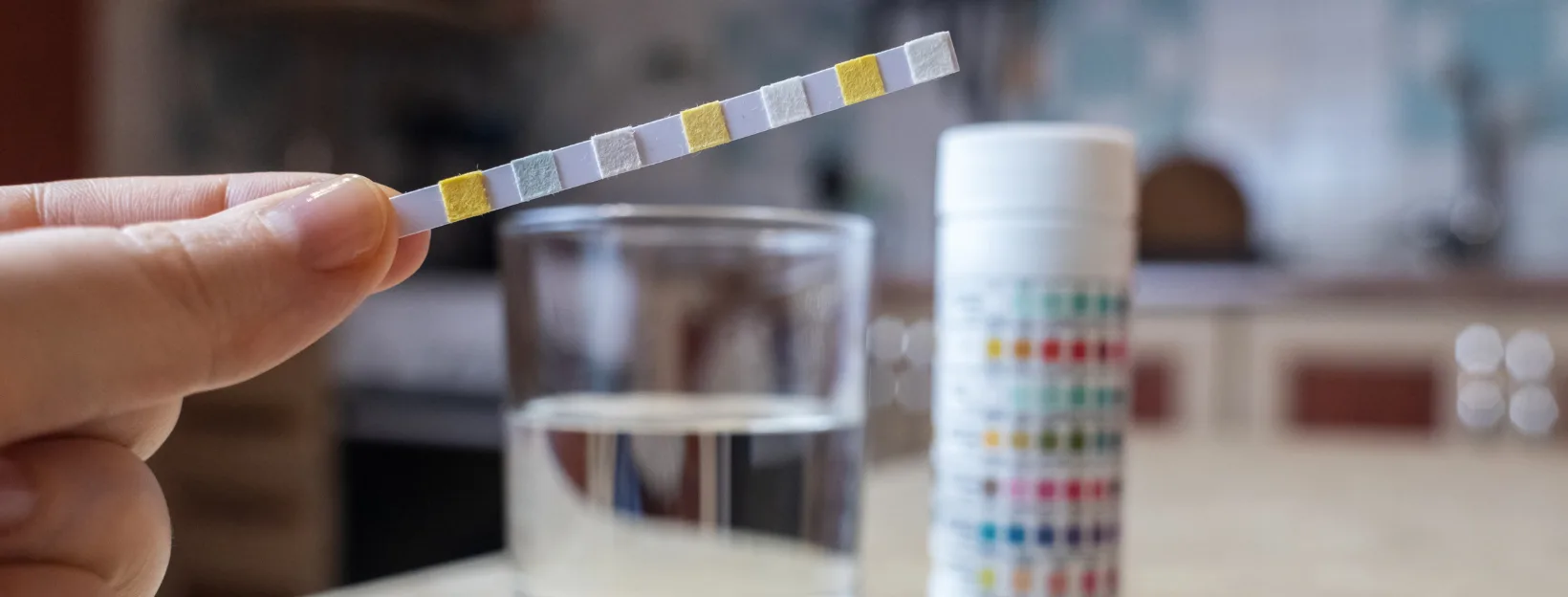
Your Tap Water Is Not as Clean as You Think: A Parent's Guide to Water Contaminants
The EPA regulates about 90 contaminants. The Environmental Working Group has detected over 300 in American tap water. The gap between what's legal and what's safe is larger than most parents realize.
Most families in the U.S. drink municipal tap water on the assumption that because it's delivered by a utility, tested to federal standards, and free-flowing at every sink, it's safe.
That's partially true. U.S. municipal water is among the cleanest in the world by baseline treatment standards. Your kid isn't going to get cholera. The utility removes most microbial contaminants and delivers water that meets the EPA's enforceable standards.
The catch: the EPA's enforceable standards cover roughly 90 contaminants. (1) The EWG's National Tap Water Database has detected over 300 unique contaminants in U.S. water supplies, many of which are either unregulated entirely or regulated at levels that independent researchers consider inadequate. The gap between "legal" and "safe" for several contaminants — lead, fluoride, disinfection byproducts, PFAS, arsenic, nitrates — is not small.
If you're reading this with a young child in the house, you're the right audience for the question: what's actually in the water you're pouring into a sippy cup every day, and what's it doing?
The Big Contaminants, Briefly
Lead. Covered at length in the lead article. Not added to water; enters via service lines, plumbing solder, and fixtures. No safe level. Standard pitcher filters do not reliably remove. Reverse osmosis does.
Fluoride. Covered in the fluoride article. Added to ~70% of U.S. municipal water at 0.7 ppm. NTP 2024 conclusion: presumed cognitive neurodevelopmental hazard. (2) Not removed by standard filters; RO and distillation remove.
Disinfection byproducts (DBPs). When chlorine or chloramine reacts with organic matter in water, it produces trihalomethanes, haloacetic acids, and other byproducts. DBPs are associated with increased bladder cancer risk in adults and some developmental concerns. Municipal water regularly tests above the EPA's enforceable limits in many cities. Activated carbon removes effectively.
PFAS ("forever chemicals"). From manufacturing and firefighting foam contamination. Widespread in U.S. water — EWG estimates 200+ million Americans have detectable PFAS in drinking water. Associated with immune effects, thyroid disruption, and developmental concerns. Activated carbon and RO remove most PFAS.
Arsenic. Natural groundwater contaminant in some regions. EPA standard is 10 ppb; research suggests harm begins at 5 ppb or lower. Associated with reduced IQ, attention deficits, and epigenetic changes. (3) RO removes effectively.
Nitrates. From agricultural runoff and septic contamination. Above 10 ppm EPA limit, cause methemoglobinemia in infants. Well water in agricultural areas often has elevated nitrates. RO removes.
Chromium-6. The "Erin Brockovich" contaminant. Industrial and natural sources. No enforceable federal standard for chromium-6 specifically (there is one for total chromium). Associated with cancer. RO removes.
Atrazine and other agricultural contaminants. Seasonal spikes in agricultural regions. Endocrine-disrupting effects documented. Activated carbon helps.
Pharmaceutical residues. Hormones, antibiotics, antidepressants, painkillers — present at low levels in most tested U.S. water supplies. Effects on developing biology at these levels are poorly characterized, but plausible reason for concern.
Microplastics. Increasingly documented across bottled and tap water. Effects on human biology actively being characterized.
The list isn't meant to alarm. It's meant to clarify: "the water is fine because my utility says so" leaves many real contaminant categories unaddressed.
What Each Filtration Technology Actually Removes
Pitcher filters (Brita, PUR):
- Remove: some chlorine, some particulates, taste/odor
- Don't reliably remove: lead, fluoride, most DBPs, most PFAS, most pharmaceuticals, arsenic, chromium
- Verdict: inadequate as sole protection. Fine as last-stage polish after better treatment.
Activated carbon block (countertop or under-sink):
- Remove: chlorine, most DBPs, many VOCs, many pharmaceuticals, some PFAS, some heavy metals depending on certification
- Don't remove: fluoride, dissolved solids (arsenic incompletely)
- Verdict: strong baseline for many contaminants. Better options exist for complete coverage.
Reverse osmosis (RO):
- Remove: essentially everything molecular — 90–99% of lead, fluoride, arsenic, nitrates, most heavy metals, most PFAS, most pharmaceuticals, DBPs
- Consideration: also removes beneficial minerals; many RO systems include a remineralization stage
- Verdict: gold standard for comprehensive removal. Best single investment for most families.
Distillation:
- Remove: essentially everything (distilled water is chemically the purest)
- Consideration: slow, energy-intensive, removes minerals
- Verdict: effective but impractical as primary household source for most families.
Water softeners:
- Remove: calcium, magnesium (water "hardness")
- Don't remove: the contaminants above
- Verdict: for scale/appliance protection, not for health filtration. Not a substitute.
UV purification:
- Kills: bacteria, viruses, protozoa
- Doesn't remove: chemical contaminants
- Verdict: useful addition for well water; irrelevant for municipal water that's already disinfected.
For most families on municipal water with a young child, under-sink reverse osmosis with a remineralization stage is the highest-ROI single choice.
At Avaneuro, the Water Quality module walks through the decision tree by contaminant and household, because the right setup depends on your specific water source.
The Myths That Are Costing You
Myth #1: "Bottled water is safer than tap."
Often not. Bottled water quality varies enormously by brand and source. Some is literally municipal tap water (Aquafina, Dasani). Some has elevated microplastic content from the bottling process. Some has fluoride; some has chromium; some has been tested as comparable to or worse than the tap water it's sold above.
And bottled water has its own problems: plastic bottles (phthalate leaching, especially with heat), environmental waste, cost. For most families, a good filtration system plus stainless steel/glass bottles is a better solution than brand-name bottled water.
Myth #2: "If my water tastes and smells fine, it's clean."
Many of the most important contaminants — lead, arsenic, fluoride, PFAS, most pharmaceuticals — are tasteless and odorless at the concentrations at which they matter. Taste tests and smell tests reveal nothing about most health-relevant exposures.
Myth #3: "My utility publishes a water quality report; I'm informed."
Utility reports (Consumer Confidence Reports) are useful but limited. They report averages across the distribution system — your specific tap might have different levels, especially for lead (which varies hugely based on your home's plumbing). They also often report in confusing units and frame borderline-legal levels as "compliant."
For lead specifically, you should test your home's tap water, first-draw, because your neighborhood's average tells you little about what comes out of your kitchen sink in the morning.
Myth #4: "Well water is cleaner than city water."
Depends entirely on the well. Private wells are not regulated the way municipal water is — the well owner is fully responsible for testing and treatment. Wells can have: bacterial contamination, nitrates, arsenic, manganese, radon, natural fluoride, pesticide runoff, and industrial/septic contamination.
If you're on a well, annual testing at minimum — a comprehensive panel every few years — is non-negotiable. Especially if you have young children or are pregnant.
The Numbers That Matter
| What's in tap water | Impact | Treatment |
|---|---|---|
| Lead | No safe level; measurable IQ loss (covered in lead article) | RO |
| Fluoride | NTP 2024: presumed neurodevelopmental hazard (2) | RO, distillation, activated alumina |
| Disinfection byproducts | Bladder cancer risk; developmental concerns | Activated carbon |
| PFAS | Immune, thyroid, developmental concerns; 200M+ Americans exposed | RO, high-quality activated carbon |
| Arsenic | Reduced IQ, attention, epigenetic changes below EPA limit | (3) |
| Nitrates | Methemoglobinemia in infants; regional issue | RO |
| Chromium-6 | Carcinogen; no specific federal standard | RO |
| Pharmaceuticals | Ubiquitous; effects uncharacterized at low doses | Activated carbon, RO |
What Actually Works

1. Install under-sink reverse osmosis for drinking/cooking water. Budget $200–500 for the unit plus $50–100/year for filter replacement. One install protects your family's primary water source comprehensively. Models from APEC, iSpring, Express Water are well-reviewed.
2. If budget is tight, upgrade to a certified activated-carbon block system. Better than pitcher filters for most contaminants. Look for NSF/ANSI 53 (lead, certain heavy metals) and 401 (pharmaceuticals, DBPs) certifications.
3. Get your water tested — not just the utility report. First-draw sample from your kitchen sink after water's been sitting overnight. Certified lab panel including lead, copper, arsenic if regional concern, and PFAS. $50–200 depending on scope. Do it once, know your baseline.
4. If on a well, test annually and comprehensively. You are your own utility. Baseline panel: bacteria, nitrates, heavy metals, volatile organics, radon if regional. Some states offer free or subsidized well testing through university extensions.
5. Use glass or stainless steel water bottles. Not plastic, even "BPA-free" plastic. Bottles in direct sun or hot cars concentrate leaching problems.
6. Think about shower filtration too. Children absorb chlorine and DBPs through skin during hot showers, and inhale some volatilized. A whole-house carbon filter or a shower-head filter reduces this. Often overlooked but meaningful, especially in cities with aggressive chlorination.
7. Don't drink hot tap water. Hot water leaches more lead and other metals from plumbing. For cooking, start with cold tap, heat it up.
8. Replace old fixtures if lead is a concern. Pre-1986 plumbing often has lead solder. Faucets made before 2014 may have higher-lead brass. NSF 61 or "lead-free" certification on newer fixtures meaningfully reduces contribution.
The Bottom Line
Water is one of the few environmental inputs your child consumes literally every day for their entire life. The compounding matters. A toddler drinking 2 cups of fluoridated, chlorinated, pharmaceutically-contaminated municipal water daily is getting a modest dose of each — but the exposure continues for 18 years.
Filtration is one of the few household interventions where a single purchase meaningfully protects against a dozen different contaminant categories for years. The RO system installs once and runs until you move out. The replacement filters cost less than a family's monthly coffee habit. And the contaminants you're removing are a documented set of concerns, not hypothetical ones.
At Avaneuro, the Water Quality module covers the full decision tree — which filtration level for which household, how to test, what the utility reports actually tell you, and how to handle well water. Because "the water is fine" is a reassurance that doesn't survive a look at what's actually being measured.
Filter the water. Use real containers. Test once, know your baseline. And move on to the next problem, because this one, once solved, stays solved.
Go deeper: This article builds on Avaneuro's Water Quality & Filtration module — the full protocols, tools, and cited evidence base.
Related reading
- Lead Is Still in Your House. Here's Where to Look.
- Mercury, Fish, and Your Child's Developing Brain: What's Safe and What's Not
- VOCs from Furniture and Paint Are Measurably Hurting Your Child's IQ
- Mold and the Developing Brain: Why Mycotoxins Are an Under-Diagnosed Cause of Behavior Problems
References
- U.S. Environmental Protection Agency. National Primary Drinking Water Regulations. https://www.epa.gov/ground-water-and-drinking-water/national-primary-drinking-water-regulations
- National Toxicology Program. (2024). Systematic Review on Fluoride Exposure and Neurodevelopmental and Cognitive Health Effects. https://ntp.niehs.nih.gov/publications/monographs/mgraph08
- Wasserman, G.A., et al. (2004). Water Arsenic Exposure and Children's Intellectual Function in Araihazar, Bangladesh. Environmental Health Perspectives, 112(13), 1329–1333. https://pubmed.ncbi.nlm.nih.gov/15345348/