Skip to main content
Lesson 5 of 5|
Moderate Evidence
|15 min readCreating a Family Technology Policy
Putting it together—practical guidelines for managing EMF, blue light, and screen time that your whole family can follow.
Sustainable technology management requires clear policies that everyone understands, not daily negotiations. The goal is creating an environment where healthy defaults require no willpower.
The Design Principle: Environment Over Willpower
Telling a child "no screens before homework" every day creates infinite friction. Making the charger inaccessible until homework time creates zero friction.
Design choices: Physical environment (where devices live, charge, and can't go), technical controls (parental controls, router schedules), social norms (what parents model, what happens at certain times).
Building Your Family Tech Policy
Step 1: Clarify your values. What do you want for your child that technology might interfere with? Quality sleep, physical activity, face-to-face relationships, outdoor time, family connection, focus and attention, creativity.
Step 2: Identify high-leverage rules. A few clear rules consistently enforced beat a dozen rules sporadically applied. Examples: No screens in bedrooms (ever, including parents'). Screens off at X time on school nights. Devices charge in central location.
Step 3: Create enforcement mechanisms. Environmental enforcement: Central charging station, WiFi router on timer, screen-free bedroom from day one. Social enforcement: Parents follow same rules (modeling).
The Device Introduction Ladder
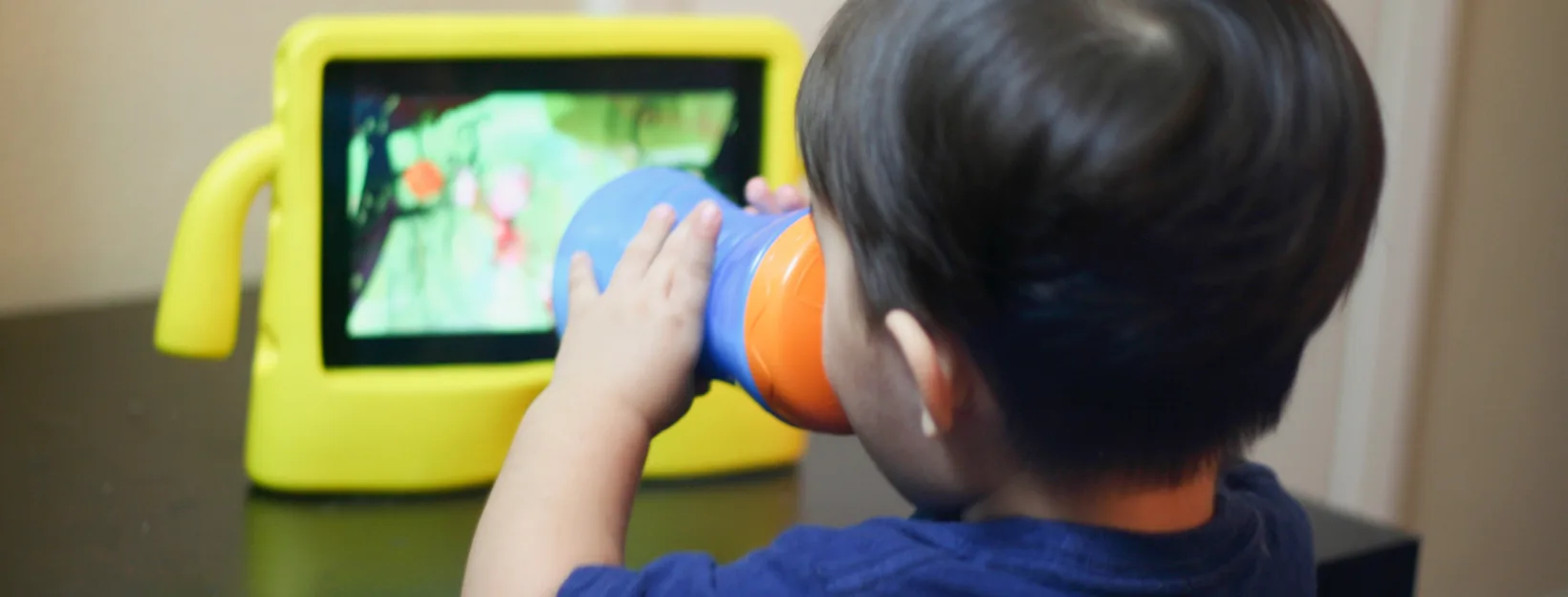
First device (~3-5 years): Family device, not personal. Lives in common area. Adult sets up content.
Gaming console (~6-8 years): Still common area only. Parental controls from day one.
Personal phone (~10-14 years): Later is almost always better. Dumb phone or limited phone first. Parental monitoring discussed openly. Bedroom ban remains.
The Parent Modeling Problem
Research consistently shows that parent screen use predicts child screen use. If you want your children to have healthy tech habits, you must model them.
Audit your own use: Do you check your phone during meals? Do you look at screens while they're talking to you? Is your phone on the nightstand?
Sample Family Tech Policy
- All screens stay in common area. No screens in bedrooms.
- Screens off at X time on school nights. Devices charge at central station.
- Morning routine complete before any screens.
- Outdoor play happens before screen time.
- These rules apply to parents too.
Educational content only. This is not medical advice, diagnosis, or treatment. Always consult your pediatrician or qualified healthcare provider before making changes to your child's diet, supplements, or care. Full disclaimer
93 people found this valuable
Developmental Pediatrician
AI-powered consultation
Educational guidance only. Not medical advice.
Ask Dr. Neuro anything about your child's development.