Skip to main content
Lesson 1 of 5|
Moderate Evidence
|15 min readUnderstanding the EMF Spectrum
Not all electromagnetic radiation is equal. Learn the physics that actually matters for your child's health—and why most EMF fears are misplaced while some concerns deserve attention.
The electromagnetic spectrum conversation has become polarized between two camps: those who dismiss all concerns as pseudoscience and those who believe WiFi is frying children's brains. Both are wrong.
Understanding the actual physics will help you protect your child from real risks while avoiding expensive snake oil.
The Physics You Need to Know
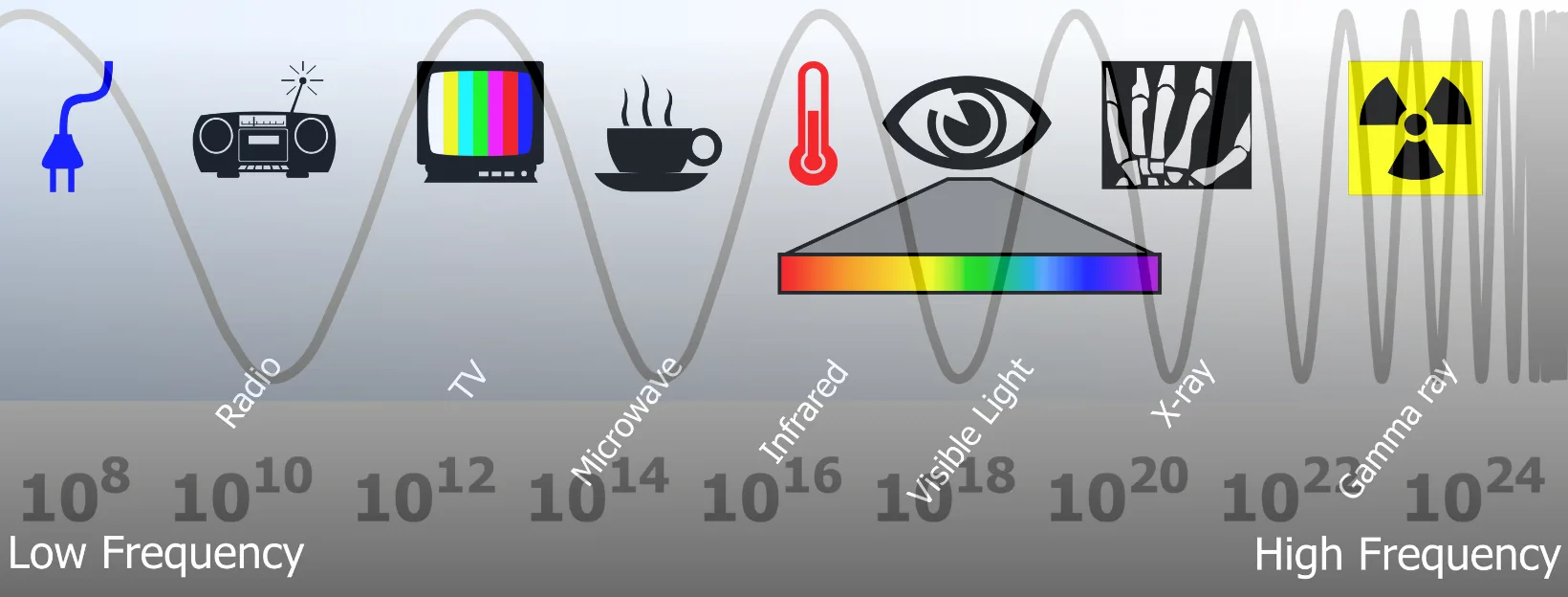
Electromagnetic radiation varies by frequency and energy:
Ionizing radiation (X-rays, gamma rays): High enough energy to break chemical bonds and damage DNA directly. Universally dangerous. Your child should minimize medical imaging exposure.
Non-ionizing radiation (radio waves, microwaves, visible light): Cannot break chemical bonds. This includes WiFi, cell phones, and power lines. The question isn't whether it's directly DNA-damaging (it's not)—it's whether there are other biological effects.
The distinction that matters: Just because something can't cause cancer through DNA damage doesn't mean it has no biological effects. Your microwave heats food through non-ionizing radiation. The question is whether chronic low-level exposure has developmental effects.
What the Research Actually Shows
Cell phones and RF radiation: The largest study (Interphone, 13 countries) found no overall cancer increase from cell phone use. However, the heaviest users showed slight increases in glioma and acoustic neuroma. Children's skulls are thinner and their brains are developing—applying adult studies directly may underestimate child risk.
WiFi and development: Current evidence doesn't support WiFi causing harm at typical exposure levels. However, studies on chronic exposure during development are limited. The WHO classifies RF radiation as "possibly carcinogenic"—the same category as coffee.
Extremely low frequency (ELF) fields from power lines: Epidemiological studies consistently show a 1.5-2x increase in childhood leukemia for children living near high-voltage power lines. The mechanism is unknown, and the absolute risk increase is small, but the association is robust.
The Real Concerns for Children
Thermal effects: High-power RF can heat tissue. Current safety standards prevent this. Your WiFi router isn't cooking anyone.
Developing nervous system: Children's brains are still myelinating until their mid-20s. Whether chronic low-level EMF exposure affects this process is genuinely unknown—absence of evidence isn't evidence of absence.
Cumulative lifetime exposure: Today's children will have 70+ years of exposure to devices that are 20 years old. We cannot have long-term studies on effects that take decades to appear.
The Hierarchy of Evidence
Strong evidence of harm: Ionizing radiation, high-voltage power line proximity (leukemia)
Moderate evidence of concern: Heavy cell phone use (adults), RF exposure to developing brain (mechanism plausible, studies limited)
Weak or no evidence of harm: WiFi at normal distances, Bluetooth, household appliances
No plausible mechanism for harm: "EMF sensitivity" symptoms, most marketed EMF products
Practical Implications
The goal isn't eliminating all EMF exposure—that's impossible and unnecessary. It's reducing unnecessary exposure, especially during critical developmental windows, while not driving yourself crazy.
The distance principle: EMF exposure decreases dramatically with distance (inverse square law). A phone 1 inch from your child's head delivers 100x more exposure than at 10 inches.
The duration principle: Brief exposures matter less than chronic ones. A video call isn't concerning; sleeping with a phone under a pillow is.
The developmental principle: Be more cautious during periods of rapid brain development (in utero, infancy, early childhood).
Educational content only. This is not medical advice, diagnosis, or treatment. Always consult your pediatrician or qualified healthcare provider before making changes to your child's diet, supplements, or care. Full disclaimer
Tools for This Lesson
105 people found this valuable
Rachel B.: “Thank you for actually explaining the physics in an understandable way. Most EMF content is either 'everything is killin...”
David R.: “The dose-response and distance relationships are really helpful to understand. Knowing that moving the wifi router from ...”
Developmental Pediatrician
AI-powered consultation
Educational guidance only. Not medical advice.
Ask Dr. Neuro anything about your child's development.